
Last Updated: November 24, 2026
Quick Summary
Compare pool replastering estimates by checking that every bid covers the same scope, including drain and refill, surface removal, crack repair, plumbing, finish product and warranty. Put each bid into the same line-item checklist, then divide each total by the confirmed surface area to get a comparable cost per square foot.
- Collect at least three written estimates so you have a real basis for comparison.
- Ask each contractor to name the exact finish product, not just “pool plaster”.
- A blank or vague line item means the work is not covered and needs a revised quote.
- Ask for the linear footage inspected for crack repair so the repair line is measured, not estimated.
- Watch for allowances and exclusions, and ask for a written dollar cap on concealed-damage repairs.
Table of Contents
- How to Compare Pool Replastering Estimates
- What a Complete Pool Replastering Estimate Should Include
- Building a Pool Replastering Estimate Checklist for Side-by-Side Review
- Using a Pool Plaster Calculator to Check Square Footage and Surface Area
- Comparing Pool Resurfacing Cost per Square Foot Across Bids
- Checking Pool Replastering Warranty Terms and Contractor Credentials
- Red Flags, Exclusions, and Change-Order Risks to Watch For
- Choosing the Right Pool Replastering Contractor for Your Project
- Frequently Asked Questions
How to Compare Pool Replastering Estimates
Pool replastering estimates are hard to compare because no two contractors price the same job the same way. One bid may cover acid washing, crack repair and a new plumbing return, while another covers only the plaster itself. This guide helps McKinney homeowners line up pool replastering estimates side by side and see what each number actually includes. Pool replastering estimate comparisons only work when every bid describes the same scope, so the rest of this article focuses on that.
Pool replastering estimates typically cover surface preparation, the plaster material, labor and cleanup. Many bids also list repairs, but the amount of repair work varies widely from one pool to the next. Start by collecting at least three written estimates so you have a real basis for comparison.
What a Complete Pool Replastering Estimate Should Include
A complete estimate states the scope of work in plain language. It should list the draining method, surface removal, crack and plumbing repairs, the plaster or finish type, and the cleanup and refilling steps. Missing items are the most common reason one bid looks cheaper than another.
Ask each contractor to name the exact product and finish. A quote that says only “pool plaster” leaves the surface quality open to interpretation. Also confirm who handles permits, if your city requires them, and whether the quote includes a disposal fee for removed material.
Building a Pool Replastering Estimate Checklist for Side-by-Side Review
A checklist turns several quotes into a fair comparison, but only if the checklist is granular enough to expose the line items contractors routinely fold together or leave out. The table below is a normalization worksheet: every bid goes into the same rows, in the contractor’s own words, so gaps and padded allowances become visible before you sign anything.
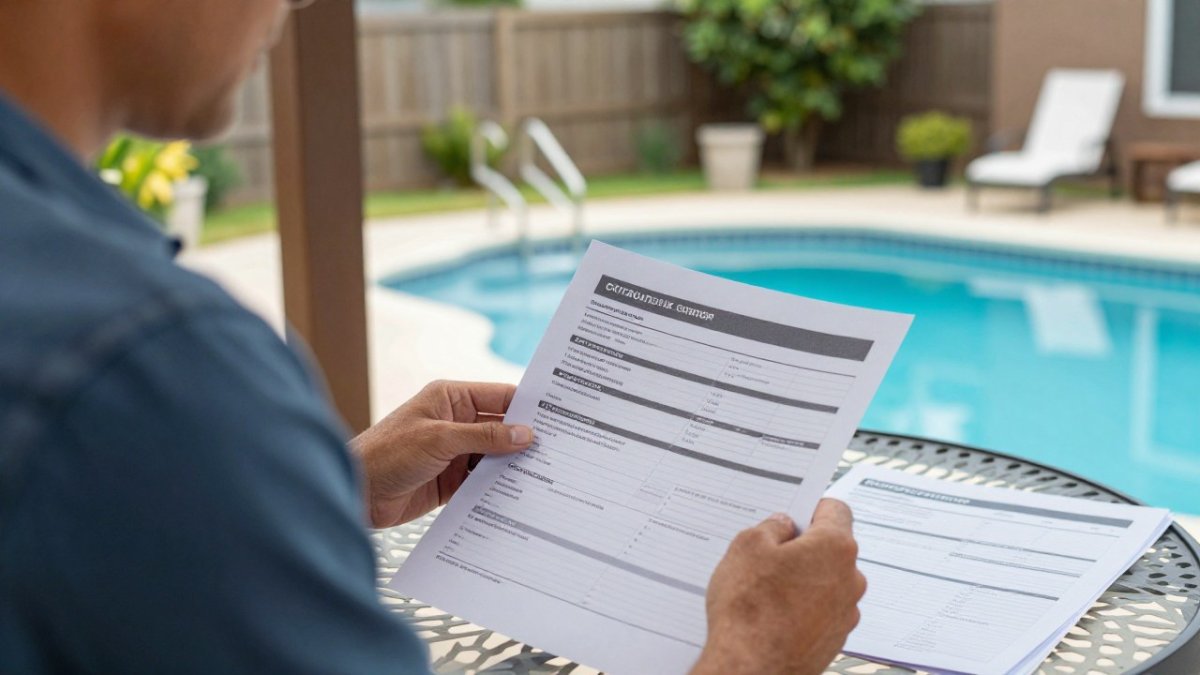
| Line item | What to capture from each bid | Bid A | Bid B | Bid C |
|---|---|---|---|---|
| Drain and refill | Who drains, where water goes, who refills, whether water is billed | |||
| Surface removal | Method (chip, sandblast, hydro-mill), depth of removal, disposal included? | |||
| Acid wash or bond coat | Included or excluded, product named | |||
| Crack repair | Linear feet priced, epoxy vs. hydraulic cement, stapling included? | |||
| Plumbing and fittings | Returns, skimmers, main drains, light niches, repair or replace | |||
| Tile and coping | Replaced, reused, or excluded; allowance amount if allowance | |||
| Finish product | Manufacturer, product line, color, thickness in inches | |||
| Startup and curing | Fill schedule, startup chemicals, brushing instructions, who performs | |||
| Permits and inspections | Who pulls, who pays, inspection included? | |||
| Disposal fees | Dumpster, haul-off, weight-based fees | |||
| Concealed-damage allowance | Dollar cap, written authorization process | |||
| Payment schedule | Deposit %, progress draws, final payment trigger | |||
| Warranty | Workmanship years, manufacturer coverage, transferability |
Fill each cell with the contractor’s own language, not your paraphrase. A blank cell means the item is not covered, and that gap is a reason to request a revised quote rather than assume it is included. A cell that says “included” with no product name, quantity, or dollar figure is a second kind of blank, treat it the same way.
Watch out: two bids can both list “crack repair” and still not be comparable if one prices ten linear feet and the other prices forty. Ask each contractor to state the linear footage they inspected and the unit price they applied, so the repair line is measured rather than estimated.
A fair process for obtaining comparable bids starts before the worksheet: give every contractor the same written scope template at the first site visit, ask each to mark items as included, excluded, or allowance, and require the completed worksheet back with the bid. Contractors who resist a line-item format are telling you something about how change orders will be handled later.
Using a Pool Plaster Calculator to Check Square Footage and Surface Area
A pool plaster calculator estimates how much surface you need to cover, which lets you test whether each bid’s square footage is reasonable. Measure the length, width and average depth, then use those figures to estimate the wetted surface area, including the steps and the spa if one is attached.
Check each contractor’s square footage against your own figure. A large gap usually means one bid measured the pool differently or is pricing the wrong surface. Use the same measurement for every bid so the comparison stays fair.
Comparing Pool Resurfacing Cost per Square Foot Across Bids
Cost per square foot is the most direct way to compare pool resurfacing bids. Divide each total by the surface area you confirmed earlier. This converts different job sizes into one number you can compare.
Cost per square foot only means something when the scope matches. A low per-square-foot price that excludes crack repair can cost more in the end. Compare each bid’s per-square-foot price alongside its checklist results, not on its own.
Local price context can also help you judge whether a bid is reasonable. Deck-O-Art’s pool resurfacing cost guide for McKinney explains typical local pricing, and a breakdown of renovation price factors shows which variables most often move the total up or down.
Checking Pool Replastering Warranty Terms and Contractor Credentials
A warranty protects you only if its terms are clear. Ask each contractor for the warranty in writing, including how many years it lasts, what it covers and what it excludes. Compare these terms the same way you compare scope.
Verify credentials as well. Confirm that the contractor carries liability and workers’ compensation insurance, and ask whether the crew is employed directly or subcontracted. Deck-O-Art, for example, is BBB-accredited and fully insured, and works with a mostly in-house workforce, but you should confirm these details for any contractor you consider. For a fuller checklist, read how to choose a pool renovation contractor.
Red Flags, Exclusions, and Change-Order Risks to Watch For
Unusually low bids rarely stay low. The difference between the bid and the final invoice is usually built into the estimate as an allowance, an exclusion, or a vague scope phrase that gets clarified after demolition. Reading for those three mechanisms is the fastest way to spot a bid that will grow.
Allowances. An allowance is a placeholder dollar amount for work the contractor has not priced precisely, commonly tile, coping, or “miscellaneous repairs.” A $500 tile allowance on a pool that needs $3,000 of tile is not a $500 line; it is a $2,500 change order waiting to happen. Ask for the allowance amount, the unit basis (per square foot, per linear foot), and the written process for approving overages before work proceeds.
Exclusions. Exclusions are the mirror image: work the contractor has deliberately left out. Common exclusions in pool replastering bids include water for refilling, startup chemicals, disposal of removed plaster, permits, tile and coping, deck repair adjacent to the coping, and repair of concealed plumbing. None of these is unreasonable to exclude, but each one has to be priced somewhere, either in the bid or in your own budget, before you can compare totals.
Change-order risk. Concealed damage is the wildcard. Once the old surface is removed, cracks, delamination, and plumbing failures that were invisible at the site visit become visible. A bid that says “any additional repairs as needed” gives the contractor unlimited pricing discretion at the moment you have the least leverage. A better bid states a dollar cap for concealed-damage repair, a written authorization step before exceeding the cap, and a unit price for common repairs such as crack stapling or return-line replacement.
Other warning signs worth weighing:
- A price far below every other bid with no stated reason, usually an excluded scope item, not a discount
- A verbal scope with no written line items
- Payment due in full before work starts, or a deposit well above what local practice supports
- No warranty, a warranty with no stated length, or a workmanship warranty that excludes the finish itself
- Pressure to sign quickly or to skip the second site visit
- A bid that names no finish product, only “pool plaster”
Watch out: a bid that is unusually high deserves the same scrutiny as a low one. High bids sometimes carry large allowances that were never reconciled to the actual pool, or they price a full renovation when a replaster would meet the need. Ask the contractor to break the total into labor, materials, and allowances so you can see which line is driving the number.
Before signing, ask each contractor to put every allowance, exclusion, and change-order term in writing, and confirm that the final payment is tied to a completed walkthrough rather than to the start of fill.
Choosing the Right Pool Replastering Contractor for Your Project
Once your checklist is complete, choose the contractor whose estimate is most complete and whose warranty and credentials hold up to a check. You can find and compare local pool contractors in McKinney to build your shortlist before requesting estimates. The lowest number is not always the best value. Deck-O-Art’s team can walk you through the scope and provide an estimate for your property, so you can compare it directly against the bids you have. If you are still deciding whether your pool needs replastering at all, these warning signs of aging plaster can help you decide when to act.
To request a site survey and a written, line-item estimate from Deck-O-Art, contact us today.
Frequently Asked Questions
What is the average cost of replastering a pool?
Replastering cost depends on pool size, surface area, the plaster type you choose, the condition of the existing surface, and whether repairs or plumbing work are needed. Because pricing varies with these factors, Deck-O-Art does not publish a typical price for this work. Contact Deck-O-Art or visit the website for a current quote based on your pool’s measurements and scope. When you compare estimates, make sure each one covers the same surface area, finish, prep work, and exclusions so the totals are comparable.
What should a pool replastering estimate include?
A complete estimate should list the pool’s measured surface area, the plaster or finish type, drain and surface removal, crack and plumbing repairs, cleanup, disposal, start and finish timing, and the warranty terms. It should also state any allowances, exclusions, and how change orders are priced. If one bid leaves out a line item that another includes, the lower total may simply reflect less work. Ask each contractor to break the price into labor and materials so you can compare them directly.
How do you compare pool resurfacing quotes fairly?
Start by confirming that every bid uses the same pool measurements, finish specification, and scope of work. Then compare cost per square foot, the included prep work, and the exclusions. Note the warranty length and what it covers, and ask whether repairs found after draining are included. Using a standard checklist for each quote helps you spot differences quickly and avoid choosing based on a low total that leaves out important work.
What questions should I ask a pool replastering contractor?
Ask how long the project will take, whether crews are employed directly or subcontracted, and who handles draining, surface removal, and plumbing. Request proof of insurance and any credentials, and ask for the warranty in writing. Also ask how unexpected repairs are priced and how they will be approved before work continues. Clear answers to these questions make it easier to compare bids and reduce the risk of costly surprises.
