
Last Updated: October 25, 2026
Quick Summary
The cost of a pool renovation in 2026 depends on what you replace, how big the pool is, what condition the shell is in, and which finish you choose. Labor is the single largest line item on most projects, and it scales with access, demolition, and prep work rather than with the materials themselves.
- Every renovation quote breaks down into demolition and prep, materials, labor and installation, and contingency.
- Resurfacing is usually the largest single line item in a pool renovation.
- Pebble and quartz finishes cost more up front and last longer than white plaster.
- Hold a contingency in reserve rather than spending your full budget on finishes.
- Schedule in cooler months to avoid the worst heat during finish work and be ready for swim season.
Table of Contents
- What Drives Pool Renovation Costs in 2026
- Pool Renovation Cost by Project: What Each Upgrade Adds
- Pool Resurfacing Cost: Plaster, Quartz, and Pebble Finishes
- How Pool Type, Size, and Condition Change the Price
- Hidden Costs and Structural Repairs to Budget For
- Pool Renovation Timeline: Sequencing and Seasonal Scheduling
- Pool Renovation Financing: Ways to Spread the Cost
- Compare Quotes and Book Your Pool Renovation
- Frequently Asked Questions
What Drives Pool Renovation Costs in 2026
The cost of a pool renovation in 2026 depends on four things: what you replace, how big the pool is, what condition the shell is in, and which finish you choose. Labor is the single largest line item on most projects, and it scales with access, demolition, and prep work rather than with the materials themselves.
Here at Deck-O-Art, we have worked on North Texas pools since 1998, and we have watched homeowners get surprised by the same three things on almost every quote: tear-out, drainage, and the cost of doing nothing about either.
Pool renovation is the process of replacing or restoring the worn surfaces and systems of an existing swimming pool, including the interior finish, waterline tile, coping, decking, and equipment, without demolishing and rebuilding the pool structure. That distinction matters, because a renovation typically costs a fraction of new pool construction while addressing the same visible problems.
Four Cost Categories That Set Your Price
Every renovation quote you receive will break down into four buckets. Understanding them is how you tell a fair bid from a thin one.
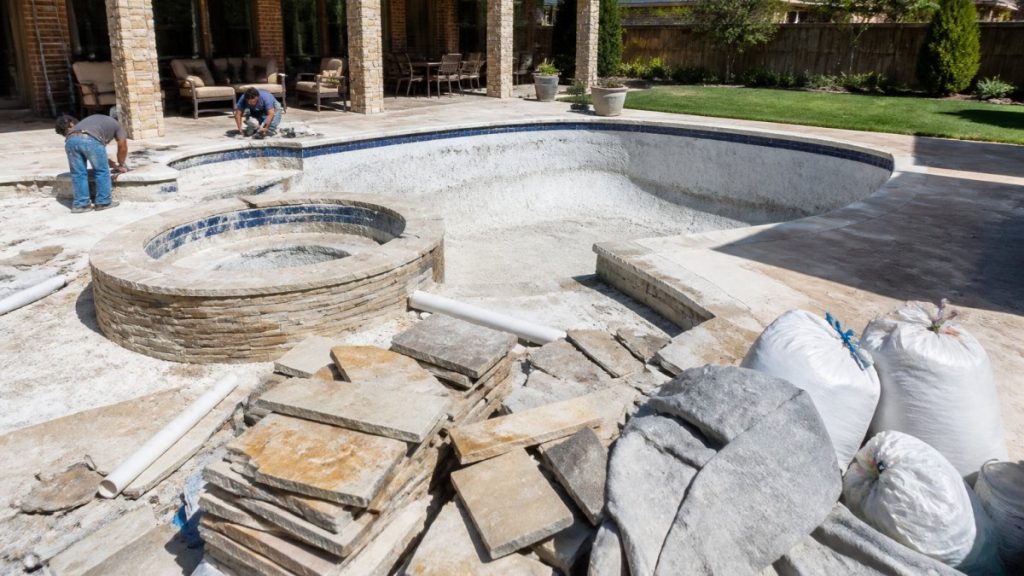
- Demolition and prep. Chipping out old plaster, removing failed tile, and grinding the shell. This is labor-heavy and varies with how stubborn the old finish is.
- Materials. Finish, tile, coping, and decking products. Material costs are the most predictable part of the project and the easiest to compare across bids.
- Labor and installation. Crew time, equipment, and site protection. A mostly in-house crew controls this better than a company that subs out every trade.
- Contingency. The allowance for what the tear-out reveals. Structural repairs, plumbing leaks, and drainage corrections live here.
Watch out: bids that quote a single lump sum without separating these categories are nearly impossible to compare, and they usually leave the contingency to you.
Pool Renovation Cost by Project: What Each Upgrade Adds
The cost of a pool renovation climbs with each component you add, and the components interact. Replacing tile without addressing coping rarely looks right, and resurfacing without fixing a plumbing leak wastes the new finish. Here is how we would sequence a typical project and what each stage involves.
| Component | What It Involves | Main Cost Drivers |
|---|---|---|
| Interior resurfacing | Chip out old finish, prep shell, apply new finish | Finish type, pool size, tear-out difficulty |
| Waterline tile | Remove failed tile, set and grout new tile | Tile material, square footage, substrate repair |
| Coping | Replace or reset the pool edge | Material choice, length of perimeter |
| Decking | Repair or overlay surrounding hardscape | Deck area, overlay versus replacement, drainage |
| Equipment | Pumps, filters, heaters, lighting | Unit selection, electrical work, plumbing runs |
| Custom features | Water features, tanning ledges, lighting | Design complexity, structural work required |
Waterline Tile, Coping, and Deck Work
Tile, coping, and decking are where most renovation budgets drift, because the visible damage is usually the smallest part of the problem. For smaller jobs, this guide to repairing pool tiles walks through the how-to before you commit to a full renovation.
And if the surrounding hardscape needs work at the same time, you can see what our pool and patio decking service covers.
Drainage deserves its own line in the budget. Standing water against a pool deck undermines coping, stains concrete, and eventually finds its way under the shell. Correcting it during a renovation costs far less than correcting it after a new deck is poured.
Equipment Upgrades and Custom Features
Equipment is the part of a pool renovation where the payback is easiest to see. A variable-speed pump, a modern filter, and LED lighting all reduce running costs compared with older single-speed equipment, and the upgrade is cheapest while the pool is already drained and the deck is already open.
Custom features are optional and priced accordingly. Water features, tanning ledges, and upgraded lighting add design value, but each one adds structural and plumbing work. We recommend deciding on features before demolition begins, not during, because retrofitting them later means cutting into a finished surface.
Pool Resurfacing Cost: Plaster, Quartz, and Pebble Finishes
Resurfacing is usually the largest single line item in a pool renovation, and the finish you choose sets both the price and the service life. If you are unsure whether your current plaster is at that point, these signs you need new pool plaster will help you decide.
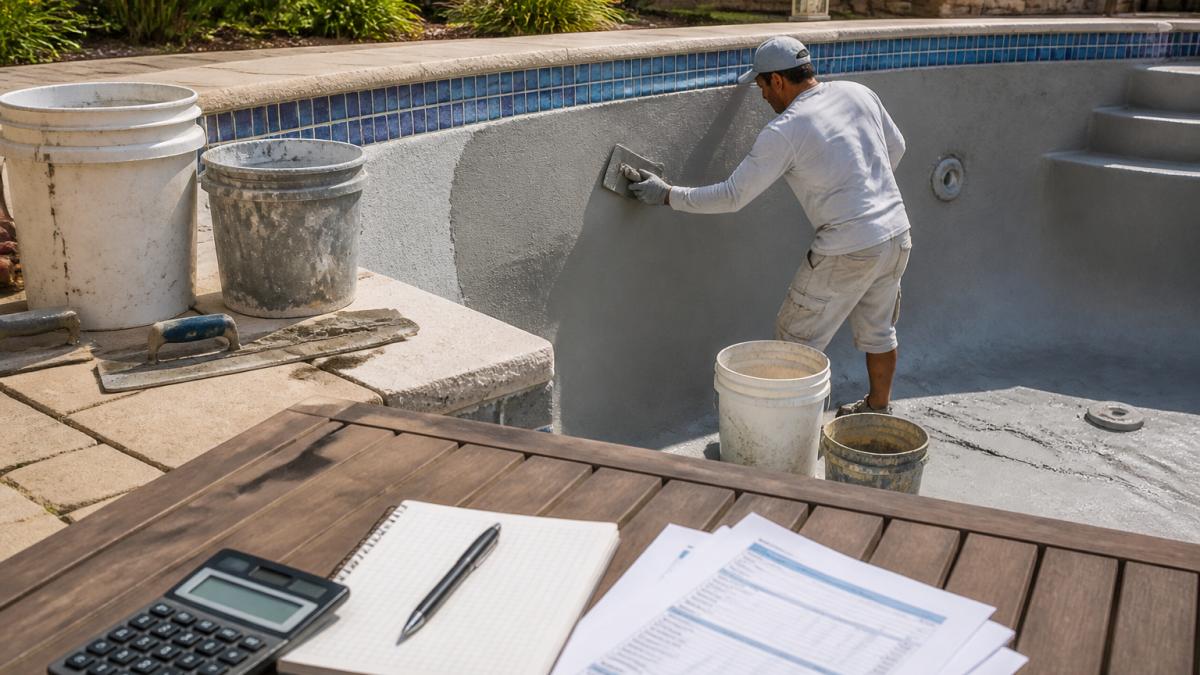
The honest trade-off: pebble and quartz cost more up front and last longer, while plaster costs less and gets you back in the water sooner. For a pool you plan to keep for decades, the longer-life finishes usually win on total cost.
How Pool Type, Size, and Condition Change the Price
Three variables move a quote more than anything else: the pool’s size, its construction type, and the condition of what is underneath the finish. A small inground pool with sound plaster and intact coping is the simplest project. A large pool with a vinyl liner, failing fittings, and a deck that has settled is a different job entirely.
Size drives material quantities and crew days in a fairly linear way. Construction type changes the prep work: gunite and shotcrete shells accept a new finish directly after prep, while vinyl liner pools involve liner replacement and fitting work rather than resurfacing.
For a residential swimming pool, the practical rule is that the older the pool and the longer it has gone without service, the wider the range on your estimate. That is not a sales tactic. It is simply what happens when a quote has to account for unknowns.
Hidden Costs and Structural Repairs to Budget For
The most common mistake we see homeowners make is budgeting for the visible work and nothing else. A renovation opens the pool up, and opening it up reveals things.
- Structural repairs. Cracks in the shell, failed bond beams, and delaminated areas all need correction before a new finish goes on.
- Plumbing leaks. Older pools often have lines that have been losing water slowly for years. Pressure testing before resurfacing is cheap insurance.
- Drainage corrections. Water management around the pool and patio, including grading and drainage runs.
- Permits and inspections. Requirements vary by project scope and jurisdiction, so confirm what applies to your renovation with your local building department before work starts.
- Site protection and disposal. Hauling away old material and protecting landscaping during the project.
We recommend holding a contingency in reserve rather than spending your full budget on finishes. A renovation that runs out of money mid-project is a renovation that sits unfinished.
Pool Renovation Timeline: Sequencing and Seasonal Scheduling
A typical pool renovation runs in a fixed sequence: drain and demo, structural and plumbing repairs, surface prep, finish application, tile and coping, decking, then refill and startup.
Season matters in North Texas. Scheduling in cooler months avoids the worst of the heat during finish work and gets you back in the water by the start of swim season. Booking early also matters, because renovation calendars fill as spring approaches.
The thing nobody tells you about timelines: the finish needs to cure before you swim, and the fill and startup period is not instant. Plan for a stretch of time after the crew leaves before the pool is ready to use.
Pool Renovation Financing: Ways to Spread the Cost
Most homeowners do not pay for a pool renovation in a single lump sum, and there are several common ways to spread it. The right choice depends on how long you plan to stay in the home and how much of the project is discretionary.
- Cash savings. No interest, no application, and the strongest negotiating position on scope.
- Home equity products. A home equity loan or line of credit uses your property as security and typically carries a lower rate than unsecured borrowing.
- Unsecured home improvement loans. Faster to arrange, no home equity required, usually a higher rate.
- Contractor payment schedules. Staged payments tied to project milestones rather than paid up front.
Two rules apply regardless of the route you choose. First, only finance the work you have actually scoped, not a wish list. Second, verify the contractor’s insurance and credentials before any money changes hands, because financing a project with an uninsured contractor is the worst of both worlds.
Compare Quotes and Book Your Pool Renovation
Comparing renovation quotes is where most homeowners either save money or lose it, and the difference comes down to scope detail. A lower bid is only lower if it covers the same work.
Use this checklist when you sit down with each bid:
- Is demolition and haul-away included, or listed as an extra?
- Is the finish named by product and type, not just “plaster”?
- Are tile and coping quantities listed in square feet or linear feet?
- Is there a stated contingency, and how are overages approved?
- Is drainage addressed, or excluded?
- Are permits and inspections included?
- Is the crew in-house or subcontracted?
- Is the contractor insured, and can they show it?
- Is the payment schedule tied to milestones?
- Is the timeline written down with a start and completion window?
When you are ready to talk scope and pricing for your own pool, you can contact our team to set up a consultation and site survey. Before you sign anything, our guide to hiring pool contractors in McKinney TX covers how to vet and hire locally.
The gap between a renovation that lasts and one that fails early is almost never the finish. It is the prep, the drainage, and whether the crew doing the work is the crew you hired.
Frequently Asked Questions
How much does it cost to renovate a swimming pool in 2026?
There is no single figure because pool renovation costs depend on scope, pool size, finish choice, and equipment needs. A cosmetic refresh with new plaster, tile, and coping sits far below a full remodel that adds water features, new decking, and upgraded pumps. Local pricing also varies. The reliable way to budget is to get an itemized quote that separates labor, materials, and contingency, then compare at least two or three contractors on identical scope.
How much does it cost to resurface a swimming pool?
Pool resurfacing cost depends on the finish you choose and the condition of the existing surface. White plaster is the least expensive option, quartz sits in the middle, and pebble finishes cost the most because of material and installation time. If the old surface has delaminated or the shell has cracks, prep work adds to the bill. Ask each contractor what surface prep is included, since skipping it is the most common reason a resurfacing job fails early.
Is it cheaper to renovate or replace a swimming pool?
Renovation is almost always cheaper than replacement unless the shell is structurally failing. Resurfacing, new tile, updated equipment, and fresh decking restore an aging pool for a fraction of demolition and new construction. Replacement only makes sense when the pool is beyond repair, badly positioned, or the wrong size for how you use the yard. A site survey from an experienced contractor will tell you which category your pool falls into.
How long does a pool renovation take?
Pool renovation timelines run from about one to two weeks for resurfacing to several weeks for a full remodel with decking and equipment. Weather, material lead times, and drying or curing periods all affect the schedule. In North Texas, scheduling work in cooler months avoids peak-season demand and gives finishes time to cure before heavy use. Ask your contractor for a written sequence of phases so you know when the pool is unusable.
