
Table of Contents
- 7 Warning Signs You Need New Pool Plaster
- Pool Plaster Cracks and Chips: When They Signal Structural Trouble
- Persistent Stains and Discoloration: Plaster Damage or Water Chemistry?
- Pool Plaster Repair vs. Resurfacing: How to Decide
- Pool Replastering Lifespan: How Long Your New Finish Should Last
- Pool Replastering Cost, Timeline, and What to Expect
- Preventing Premature Plaster Failure
- Conclusion: Take Action Before Small Problems Become Major Repairs
- Frequently Asked Questions
Last Updated: October 6, 2026
7 Warning Signs You Need New Pool Plaster
Spotting the signs you need new pool plaster early saves money and prevents bigger structural problems.
At Deck-O-Art, we have worked on pools across McKinney since 1998, and the pattern is always the same: homeowners wait too long.
Below are the seven warning signs, plus how to tell plaster damage from a chemistry problem and when repair beats resurfacing.
Rough, Abrasive Surfaces That Scrape Feet and Knees
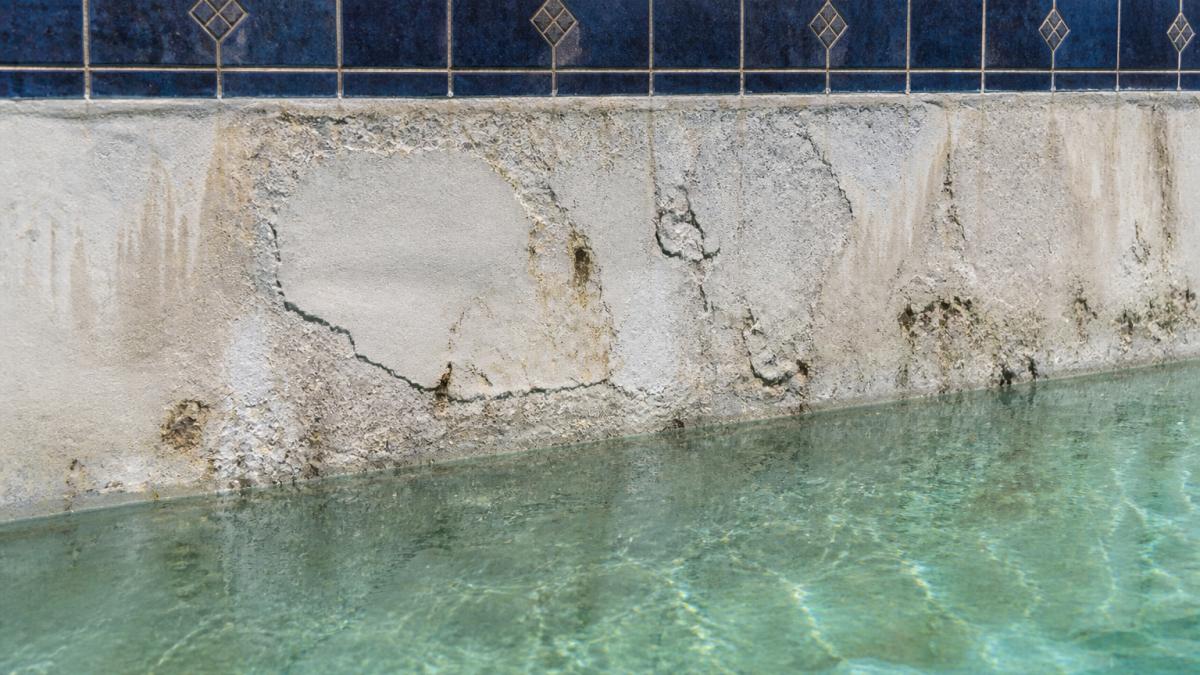
A rough, sandpaper-like surface is the most common sign that plaster is failing. When the smooth top layer wears away, the exposed aggregate scrapes skin.
Kids feel it first: scraped feet, irritated knees, complaints about the “scratchy bottom.” If the wall feels like concrete instead of glass, the plaster is done, no amount of brushing or balancing fixes it.
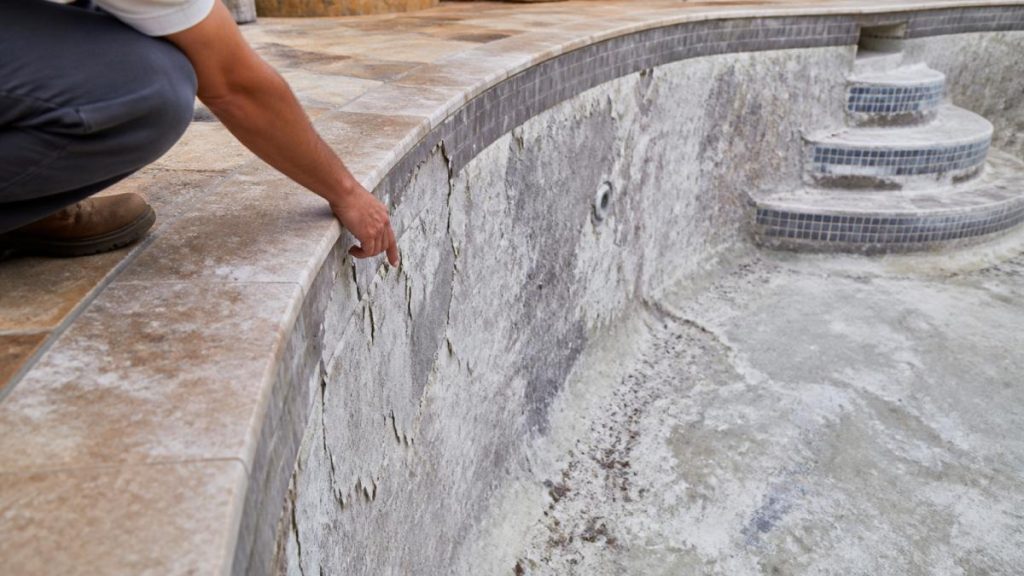
Peeling, Flaking, and Delaminating Plaster
Plaster that peels or flakes off in sheets is delaminating, and it will not stop on its own. It happens when the bond between plaster and shell breaks down, often after years of chemistry swings or a poor resurfacing.
Look for:
- Chalky flakes collecting in the skimmer or on the pool floor
- Visible layers lifting near the tile line or steps
- Patches where the finish has come off entirely
Once plaster is delaminating, patching only hides the problem. The loose areas keep spreading.
Chalking and Powdery Residue
Chalking is when plaster breaks down into a fine powder that clouds the water and leaves a white film on the walls, a haze brushing stirs up, or residue that keeps returning on the tile.
Chalking means the plaster’s surface is dissolving, the same failure that leads to roughness and delamination. Catching it early is the difference between a resurface and a renovation.
Pool Plaster Cracks and Chips: When They Signal Structural Trouble
Cracks are the sign homeowners misread most often: some panic over a cosmetic hairline, others ignore a widening crack until the shell is involved.
Hairline cracks (craze cracks). Thin, shallow, and web-like, often branching across the floor or walls.
Structural cracks. These are the ones that matter. Warning characteristics:
- Wider than a quarter inch, or wide enough to slip a coin into
- Running in a continuous line across the floor and up the wall
- Offsetting, where one side of the crack sits higher than the other
- Accompanied by a drop in water level, which can indicate a leak
Structural cracks point to movement in the gunite or concrete shell underneath, not just the finish.
Chips and spalls. Chips around fittings, steps, skimmer throats, and the waterline are common and often start small.
The Sounding Test: Finding Hollow Spots
The sounding test is the simplest way to find plaster that has lost its bond to the shell, catching problems invisible from the surface.
How to do it:
- Drain the pool, or work in the shallow end where you can reach the walls and floor.
- Tap the surface firmly with a rubber mallet or the rubber handle of a screwdriver.
- Listen for the difference: a solid, dull thud means the plaster is bonded; a hollow, drum-like sound means it has separated underneath.
- Mark every hollow spot with chalk or tape so you can map the total area.
A hollow sound is a bond failure even when the surface looks fine, which is why a visual inspection alone is not enough.
Repair vs. Resurface: Clear Thresholds
Use these criteria to decide whether patching is honest or a waste of money:
| Condition | Typical Best Option | Reasoning |
|---|---|---|
| A few isolated hairline cracks, stable | Monitor or spot repair | Cosmetic, bond intact |
| One or two small hollow spots | Targeted patch | Limited area, shell sound |
| Hollow spots across more than a small area | Resurface | Patching cannot re-bond widespread separation |
| Cracks wider than a quarter inch or offsetting | Professional inspection first | May involve the shell, not just the finish |
| Chips exposing the shell | Prompt repair or resurface | Water intrusion accelerates damage |
| Cracks that recur after patching | Resurface | Recurrence signals an underlying cause |
Two rules of thumb: if damage covers more than roughly a quarter of the surface, resurfacing is the better long-term value; and if a repair fails within a season, the problem was never isolated.
A crack that keeps coming back after patching is telling you something. Recurrence usually means the movement is in the shell, and no amount of surface patching will stop it. Get an inspection before you spend money on another patch.
When in doubt, have a professional map the cracks and hollow spots and check for leaks. That inspection is cheap compared with resurfacing twice because the first diagnosis was wrong.
Persistent Stains and Discoloration: Plaster Damage or Water Chemistry?
Not every stain means you need new plaster. This is where most homeowners misdiagnose, either wasting money on resurfacing or ignoring real damage.
Water chemistry stains are usually caused by metals (copper, iron, manganese) or unbalanced water. They tend to be brown, green, or teal and often respond to stain treatment or a water change.
Plaster damage stains are different: usually gray, black, or mottled, and they do not lift with treatment.
A simple test: if a stain fades after a proper water balance and stain treatment, it was chemistry. According to the CDC’s guidance on pool water and healthy swimming, keeping water chemistry in range also protects the finish and the people using the pool, so it is worth getting right either way.
Pool Plaster Repair vs. Resurfacing: How to Decide
Pool plaster repair vs. resurfacing comes down to how much of the finish has failed and whether the shell underneath is sound. Patching is a short-term fix for small, isolated problems; resurfacing replaces the entire finish and is right when damage is widespread.
Use this decision guide:
| Situation | Best Option | Why |
|---|---|---|
| A few small chips or hairline cracks | Spot repair | Damage is isolated and the bond is intact |
| One hollow spot under a step | Targeted patch | Limited area, shell is sound |
| Rough texture across most of the pool | Resurface | Wear is everywhere, patching won’t match |
| Widespread delamination or flaking | Resurface | Loose plaster keeps spreading |
| Cracks wider than a credit card | Inspect, then resurface | May involve the shell, not just the finish |
| Stains that won’t lift after treatment | Resurface | Plaster surface is degraded |
Our rule: if more than about a quarter of the surface is affected, resurfacing is the better long-term value. Patching a failing pool every season costs more than doing it once.
The most common mistake is patching a pool that has already failed across most of its surface. Those patches pop loose within a season, and you pay twice. If hollow spots and roughness cover a large area, resurfacing is the honest answer.
Pool Replastering Lifespan: How Long Your New Finish Should Last
A properly applied plaster finish typically lasts 7 to 12 years, but that range bundles together different finishes and levels of care.
What sets the range. The low end reflects standard white or colored cement plaster under average maintenance.
What shortens lifespan.
- Unbalanced water chemistry, especially low pH or low calcium hardness, which makes water aggressive toward the finish
- High stabilizer (cyanuric acid) levels that lock up sanitizer and let algae take hold in a roughened surface
- Poor surface prep or application on a previous resurface
- Aggressive brushing or heavy use that wears the smooth top layer faster
- Skipping regular maintenance and letting small chips and cracks grow
What extends lifespan.
- Testing water at least weekly and keeping pH, alkalinity, calcium hardness, and sanitizer in range
- Brushing walls regularly so algae does not settle into the surface
- Keeping calcium hardness in range so water does not pull minerals out of the plaster
- Fixing leaks and drainage issues so water does not sit against the shell or deck
- Addressing small chips and cracks before they spread
Reading the age of your finish. A pool built or resurfaced in the early 2010s is often due right now, which is why so many homeowners see the signs at once.
Why finish choice matters for the next project. When you resurface, the finish you pick sets the next lifespan clock.
Ask any contractor how they prep the shell before applying new plaster, and ask what finish they recommend for your maintenance habits. Surface prep and finish selection are where most resurfacing jobs succeed or fail, and they are the steps cheap bids skip.
If your finish is approaching the top of its expected range, plan the resurface before you see failures. Planning ahead lets you bundle tile, coping, and decking into one project and avoid emergency pricing.
Pool Replastering Cost, Timeline, and What to Expect
Pool replastering cost depends on pool size, finish choice, shell condition, and any bundled tile or coping work.
Timeline is more predictable: a typical resurface takes about one to two weeks from start to swimming, including draining, prep, application, and refilling.
What the process looks like:
- Drain the pool and inspect the shell
- Remove failing plaster and repair any structural issues
- Prep the surface so the new finish bonds
- Apply the new plaster or finish
- Refill and balance the water
- Manage the cure over the first few weeks
If you also want new tile, coping, or decking, bundling it into the same project usually saves time and disruption.
Preventing Premature Plaster Failure
The single biggest factor in how long plaster lasts is water chemistry. Keeping pH, alkalinity, calcium hardness, and sanitizer in range protects the finish daily.
What to do:
- Test water at least weekly and adjust as needed
- Brush the walls regularly to prevent algae from settling into the surface
- Keep calcium hardness in range so water does not pull minerals from the plaster
- Fix leaks and drainage issues so water does not sit against the pool or deck
- Address small chips and cracks before they grow
Drainage matters more than most homeowners realize, standing water around the pool and patio works against the shell and deck over time. Deck-O-Art handles drainage as part of our outdoor projects, so water moves away from the pool instead of pooling next to it.
Conclusion: Take Action Before Small Problems Become Major Repairs
Catching the signs you need new pool plaster early is the difference between a straightforward resurface and a much larger repair.
If you are seeing these signs, get a professional inspection before the damage reaches the shell. We handle swimming pool and spa renovations, tile and coping, and drainage as part of a complete outdoor transformation, all backed by a personalized consultation and site survey.
Get started with Deck-O-Art and protect your pool with a finish built to last.
Frequently Asked Questions
How can you tell if pool plaster needs replacing?
Look for rough or abrasive textures, visible cracks, peeling or flaking, persistent stains that won’t brush away, and hollow spots when you tap the surface. If your plaster is chalking or leaving a powdery residue on your hands, that’s another clear sign. A professional inspection can confirm whether the damage is cosmetic or structural, which determines whether you need a full replacement or a simpler repair.
Can pool plaster be repaired, or does it need to be resurfaced?
Small chips, isolated cracks, and minor stains can often be patched with pool plaster repair. However, if you’re seeing widespread roughness, delamination, hollow spots, or multiple cracks across the surface, resurfacing is the better investment. A sounding test helps identify how much of the surface has lost its bond. When more than a small percentage of the pool shows failure, patching becomes a temporary fix that delays the inevitable.
How long does pool replastering last?
A properly applied plaster finish typically lasts 7 to 12 years, depending on water chemistry, usage, and how well the pool is maintained. Quartz and pebble finishes can extend that range to 12 to 20 years. Keeping pH, alkalinity, and calcium hardness balanced is the single biggest factor in maximizing your pool replastering lifespan. Neglecting water chemistry can cut that lifespan in half.
How much does pool replastering cost?
Pool replastering cost varies widely based on pool size, the type of finish you choose, and the extent of surface preparation needed. Most homeowners should expect a significant investment, but pricing depends on the specific condition of your pool and the finish you select. Deck-O-Art provides personalized quotes after a site survey. Contact Deck-O-Art for a consultation and current pricing tailored to your pool.