
Last Updated: November 4, 2026
Quick Summary
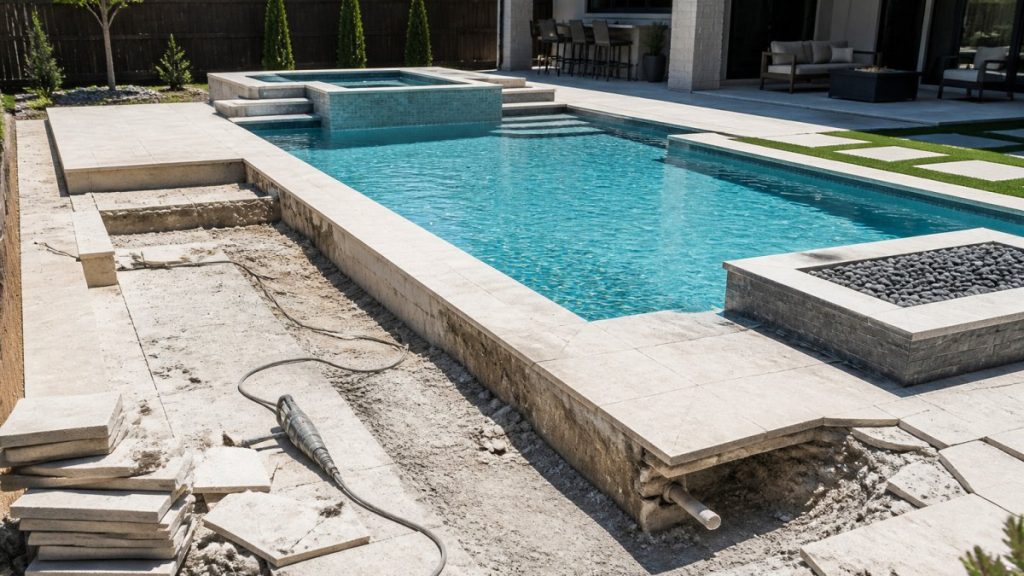
Pool modernization starts with a condition audit of the shell, surface, deck, and equipment before you price any finish. Then prioritize surfaces and edges first, since tile, coping, and waterline updates deliver the biggest visual change on an aging swimming pool.
- Check for recurring shell cracks, hollow plaster, popping tile, and failed deck mastic joints.
- Standard plaster typically lasts roughly 7 to 12 years, while pebble aggregate lasts 15 to 20 or more.
- Phase work as structural and surface fixes, then decking and drainage, then lighting and features.
- A variable-speed pump runs quieter and uses less power than a single-speed unit.
- Ask every bidder to itemize drainage and mastic work so bids compare on equal scope.
Table of Contents
- Start With a Condition Audit Before Any Pool Modernization
- Old Pool Renovation Ideas That Deliver the Biggest Visual Change
- Pool Resurfacing Options: Plaster, Pebble, and Beyond
- Decking, Lighting, and Water Features That Modernize the Whole Yard
- Pool Equipment Upgrades That Cut Operating Costs
- Pool Renovation Cost: What Drives Your Budget and How to Phase It
- Sequencing, Permits, and Choosing a Contractor You Can Trust
- Plan Your Pool Modernization With a Site Survey
- Frequently Asked Questions
Start With a Condition Audit Before Any Pool Modernization
Pool modernization starts with a condition audit, not a shopping list. Walk your pool, deck, and equipment pad before you price a single finish. An older swimming pool tells you what it needs if you know where to look.
At Deck-O-Art, we handle pool and patio work, and the same pattern often shows up on aging pools: the visible problem is rarely the whole problem. Fix the underlying cause, and the cosmetic work has a better chance of lasting.
Below, we break down the red flags to check, the upgrades that change a backyard most, and the order to do them in. The moves we cover help an old pool look more current without spending on the wrong fix first. But first, here’s what most guides get wrong: they start with finishes. We start with structure.
Structural, Surface, and Equipment Red Flags
- Cracks in the shell or steps that keep coming back after patching
- Hollow spots or loose plaster underfoot
- Tile popping off at the waterline
- Cracked or missing mastic in the deck joints
- Deck pavers that have settled or turned uneven
- Pool pump that runs loud or cycles on and off
- Standing water near the pool after rain
Any one of these can justify a closer look. Two or more usually means the pool is ready for a full renovation plan, not a patch.
Watch out: skipping the audit and jumping straight to a new finish can bury a plumbing or drainage problem under fresh plaster. You will pay twice.
Old Pool Renovation Ideas That Deliver the Biggest Visual Change
If you want the fastest visible jump, spend on surfaces and edges first. Tile, coping, and waterline updates change how an older swimming pool reads from across the yard, before anyone touches the equipment.
Tile, Coping, and Waterline Updates
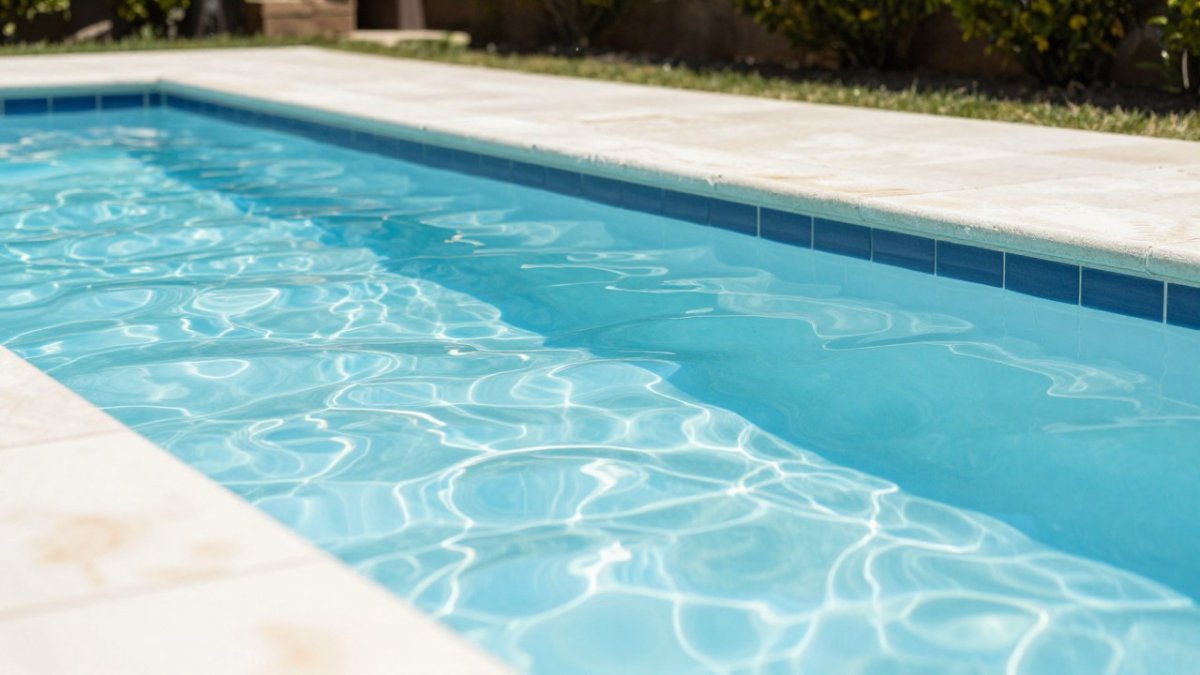
Waterline tile is the detail people notice first. A dated 1980s band in faded blue instantly ages a pool. A modern glass or stone-look tile in a tighter pattern makes the water look cleaner and the whole pool look newer.
Coping matters just as much. Cracked, chalky coping drags down a fresh finish. New coping with clean edges and a proper mastic joint seals the gap between deck and pool, which also keeps water out of places it should not be.
For a deeper walkthrough on repairing tile before you replace it, see our guide on the best ways to repair pool tiles.
Pool Resurfacing Options: Plaster, Pebble, and Beyond
Pool resurfacing options come down to three main families: traditional plaster, aggregate finishes like pebble, and specialty quartz or glass blends. Each trades cost against durability, feel underfoot, and how much chemistry attention it demands. The table below is a starting point, but the paragraphs after it explain the mechanisms that actually determine which finish survives your pool’s use pattern.
| Finish | Feel | Typical Service Life | Relative Cost | Best For |
|---|---|---|---|---|
| Standard plaster (white or colored) | Smooth | Roughly 7-12 years | Lowest | Tight budgets, low-traffic pools |
| Quartz blend | Smooth, slight texture | Roughly 10-15 years | Moderate | Balanced value, families |
| Pebble aggregate | Textured | Roughly 15-20+ years | Highest | High-traffic pools, long hold periods |
| Glass blend | Smooth, bright | Long wear | Premium | Resort-style look, reflective water color |
Those ranges are typical service lives reported by finish manufacturers and renovation contractors; actual life depends on water chemistry, fill water, and how the surface is maintained. Treat them as planning ranges, not warranties.
Why plaster fails first. Standard plaster is a cement-based surface. Over time, pool water slowly dissolves the calcium compounds in the plaster, and the surface becomes chalky, rough, and prone to staining.
What aggregate finishes change. Pebble and quartz finishes embed stone or quartz aggregate in a cement matrix.
Glass blends and color. Glass-bead and glass-blend finishes use small glass spheres to create a reflective, brighter water color.
The decision framework. Match the finish to how the pool will be used and how much chemistry attention it will get. A lightly used pool with disciplined water testing can do well with plaster.
Watch out: choosing a finish before checking the shell for cracks or hollow plaster can mean paying to resurface a pool that needed structural repair first, and the new finish will fail along the same cracks.
If your current surface is failing, check our guide to the signs you need new pool plaster before you commit to a finish.
Decking, Lighting, and Water Features That Modernize the Whole Yard
The pool is only half the picture. Decking, lighting, and water features turn a plain pool into outdoor living space. This is where a pool modernization starts to feel like a backyard design project.
Deck pavers can replace cracked concrete and give the yard a finished look. LED lighting adds warmth at night. A small waterfall or fountain adds the sound of moving water.
Fire features and an outdoor kitchen can extend the season of use for a backyard. Pool and patio decking help tie these elements together. You can see the full range of pool and patio decking options we offer for local yards.
Pool Equipment Upgrades That Cut Operating Costs
Pool equipment upgrades are often worth considering. Options such as a variable-speed pump, a modern filter, and smart controls can be discussed during a site survey.
Here is what to prioritize:
- Variable-speed pump: runs quieter and uses less power than a single-speed unit
- Modern filter: better flow with less backwashing
- Smart controls: schedule and monitor from your phone
- LED lighting: lower draw than old bulbs (Saving American Families and Businesses Money through Lighting Efficiency)
The U.S. Department of Energy guidance on pool pumps explains how variable-speed pumps cut energy use, which is why we put them first on the list.
Pool Renovation Cost: What Drives Your Budget and How to Phase It
Pool renovation cost depends on scope, materials, and what the audit reveals. Pricing depends on the specifics of each project, so please visit the Deck-O-Art website or request a quote for current pricing.
The main cost drivers.
- Finish type and square footage. Surface area is the biggest single multiplier. A larger pool with a premium aggregate finish can cost several times what a smaller plaster pool costs for the same category of work.
- Tile and coping replacement. Waterline tile and coping are labor-intensive because old material must be removed and the substrate prepped. Extent of replacement (waterline only vs. full tile) changes the number significantly.
- Deck size and paver choice. Decking is often priced per square foot, and material choice (concrete, pavers, natural stone) swings the per-square-foot cost widely.
- Equipment age and condition. A pump, filter, and heater replacement can rival the cost of resurfacing on an older pool. Variable-speed pumps and modern filters carry higher upfront prices but lower operating costs.
- Drainage corrections. Regrading, adding deck drains, or repairing settlement are often the hidden line item that separates a cheap bid from a complete one.
Pricing. Pricing depends on quantity, scope, materials, and timing. Please visit the Deck-O-Art website for current prices or request a written, itemized quote after a site survey.
How to phase the work. Phasing lets you spread the spend and stop between stages if the budget tightens. A common sequence:
- Phase 1: structural and surface fixes. Address shell cracks, hollow plaster, and plumbing leaks first, then resurface. This is the foundation everything else sits on.
- Phase 2: decking and drainage. Replace or repair decking and correct drainage once the pool surface is stable, so deck work does not get disturbed by later pool work.
- Phase 3: lighting, features, and automation. Add LED lighting, water features, and smart controls last, when the structure and deck are settled.
Phasing can add cost compared with a single project, since work may be done in separate mobilizations. The trade-off is cash flow and the ability to stop. Decide which matters more before you sign.
What the cheapest bid usually skips. Ask every bidder to itemize drainage and mastic work explicitly so you can compare bids on equal scope.
Watch out: comparing bids without a written, itemized scope can make it hard to compare projects accurately.
Sequencing, Permits, and Choosing a Contractor You Can Trust
Do the work in the right order, and the project runs smoother. Structure first, then surface, then deck, then equipment and features. Skipping ahead causes rework.
Permit requirements depend on local rules and the scope of work. Confirm what your project needs before work starts.
Choosing a contractor matters more than any single material. For local help, see this guide to hiring pool contractors in McKinney TX. Ask:
- Are you insured?
- Do you use your own crew or subcontractors?
- What happens if something fails a year from now?
- Can I see the plan before I commit?
Deck-O-Art is BBB-accredited and fully insured, and we use a mostly in-house workforce.
Plan Your Pool Modernization With a Site Survey
A site survey is the step that turns ideas into a plan you can trust. We walk the pool, deck, equipment pad, and drainage, then map what needs fixing and in what order.
Our personalized consultation and site survey process helps identify the work needed before any project begins.
Ready to see your redesign before you commit?
Frequently Asked Questions
Can you modernize an old pool without changing its shape?
Yes. Many pool modernization projects focus on the surface and edges rather than the shell itself. Work such as resurfacing or updating tile and coping can change how a pool looks without altering its footprint. Keeping the existing shape usually lowers the project scope and shortens the timeline, which matters if the structure is sound. A site survey confirms whether the shell and plumbing can support that approach before you commit.
How do you know whether an aging pool needs resurfacing or a full renovation?
Look at the interior finish first. Chalky plaster, rough patches, stains that will not brush away, and visible cracks point to resurfacing. If the cracks run through the shell, the deck is settling, or plumbing leaks repeatedly, the scope grows beyond a finish. A condition audit can help separate cosmetic wear from structural problems. Pair that inspection with a look at equipment age, since pumps and filters near the end of their life change the budget.
Which pool equipment upgrades make the biggest difference?
Equipment upgrades such as variable-speed pumps, LED lighting, and smart controls are often considered. Confirm compatibility with existing plumbing and electrical service before buying.
How long does a pool renovation take, and what does it cost?
Timelines depend on the scope of the project. Pool renovation cost depends on the specifics of each project, so please visit the Deck-O-Art website for current prices or request a quote. Plan for phased projects if the budget is tight, starting with surface and safety items before features. Ask for a written scope and schedule so you know what disruption to expect.
Modernizing an aging swimming pool design is a sequence, not a shopping spree. Get the audit right, fix structure and drainage first, and the finishes and features will last. Deck-O-Art brings a BBB-accredited, fully insured team and a mostly in-house crew to every project, with a personalized consultation and site survey that maps the work before it starts. Get started with Deck-O-Art and turn your older swimming pool into a backyard you actually use.
