
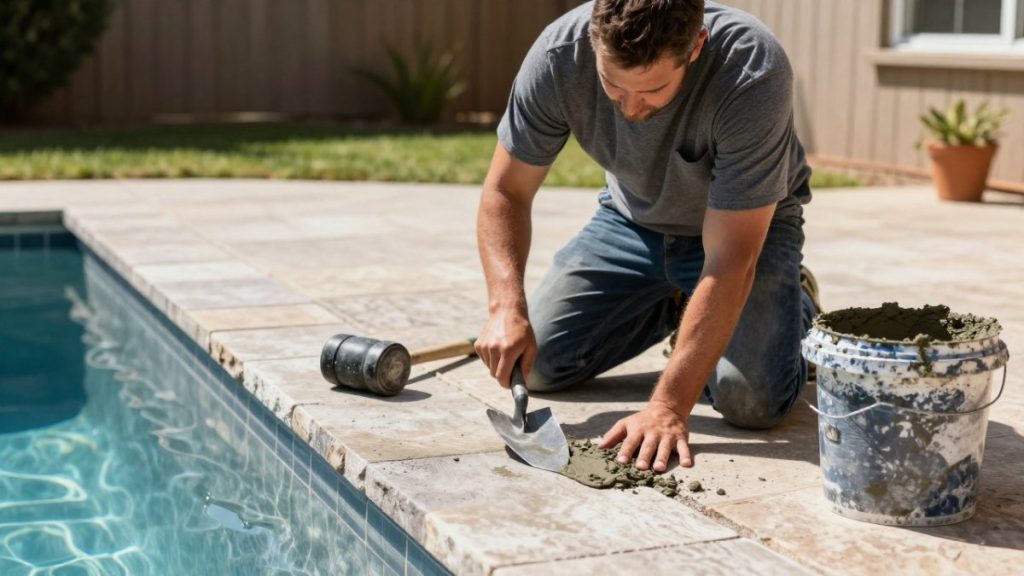
Quick Summary
Concrete, pavers and travertine each handle North Texas weather differently, and the best pool materials are those that tolerate expansive clay soil, heat and freeze-thaw cycles. Light, textured surfaces stay cooler and safer underfoot, while flexible or repairable options like pavers suit shifting ground.
- Expansive clay soil around McKinney swells and shrinks, moving decking and shell walls.
- Hairline cracks after the first wet season often signal soil movement rather than a finish defect.
- Dark, sealed surfaces can become too hot to walk on by July.
- Pavers are flexible and repairable, but their joint sand needs periodic attention.
- Ask any bid to separate installation costs from expected maintenance in a written quote.
Table of Contents
- Expansive Clay Soil and Structural Movement
- Choosing Pool Decking: Concrete, Pavers and Travertine
- Durable Pool Finishes for North Texas Summers
- Slip-Resistant, Heat-Tolerant Surfaces and Tile
- Fiberglass Versus Gunite: Pool Shell Tradeoffs
- Long-Term Cost, Drainage and Water Conservation
- Vetting Contractors Who Understand Local Conditions Before Hiring Pool Contractors in McKinney TX
- Frequently Asked Questions
How North Texas Weather Stresses Pool Materials
Pool owners in McKinney rarely think about their deck until something cracks. The same material problems keep showing up across North Texas pool surrounds. The swings in temperature, the expansive soil and the long dry spells all put stress on the surfaces you walk on and the shell you swim in. Choosing the right material starts with understanding those forces.
U.S. Geological Survey overview of expansive clay soils
Expansive Clay Soil and Structural Movement
Much of the ground around McKinney is clay-rich. Clay swells when it absorbs water and shrinks as it dries, and that cycle moves the ground under decking, coping and shell walls. A surface that is rigid, such as large-format concrete poured without proper joints, will crack where the slab is restrained.
The practical takeaway is simple: ask how a material handles movement, not just how it looks on day one. Watch for hairline cracks at the pool edge after the first wet season, because they often signal soil movement rather than a finish defect.
Heat, UV Exposure and Hard Freezes
North Texas summers push surface temperatures well past what comfortable bare feet can handle, and UV exposure fades color and degrades sealers. Winters can bring a hard freeze that pushes moisture into any crack and expands it on the next thaw. Watch out: a dark, sealed surface that looks great in spring can become too hot to walk on by July, so color and sealer choice matter as much as the base material.
Choosing Pool Decking: Concrete, Pavers and Travertine
Concrete, pavers and travertine each handle this climate differently. Travertine offers a cool, natural surface, but it is porous and needs sealing.
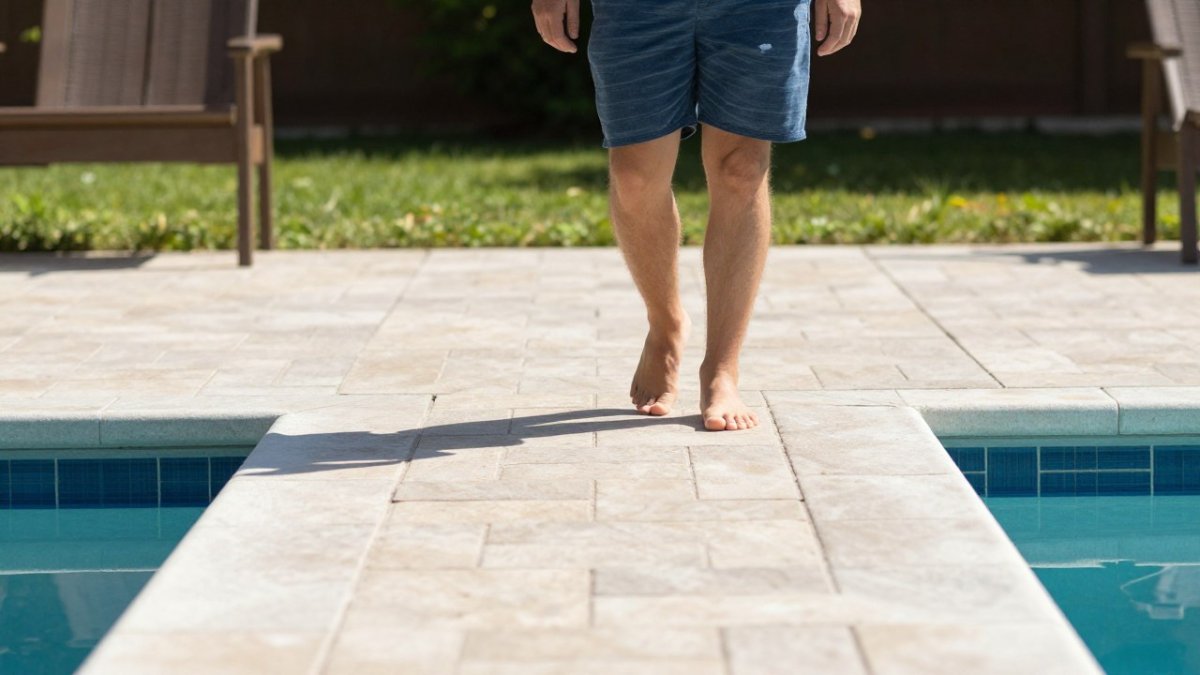
Pricing depends on quantity, dates and delivery, so request a written quote from Deck-O-Art for current figures. A reader with an aging deck considering a concrete option can compare a stamped concrete overlay for old decks before committing. For a full pool surround, our pool and patio decking service in McKinney, TX installs these materials.
Pros and cons at a glance:
- Concrete: durable and cost-efficient, but can crack on expansive soil without proper joints.
- Pavers: flexible and repairable, but joint sand needs periodic attention.
- Travertine: cool underfoot and upscale, but porous and higher maintenance.
Durable Pool Finishes for North Texas Summers
The pool shell finish takes the heat of the water and the sun. Plaster is the traditional choice and works well when it is maintained, while pebble finishes are often chosen for their durability. Watch for staining, roughness or flaking, which signal that the finish is wearing down. Learn the warning signs that your pool plaster needs replacing.
Slip-Resistant, Heat-Tolerant Surfaces and Tile
Waterline tile and deck surfaces must balance grip and heat. Textured or matte finishes reduce slipping when wet, and lighter colors stay cooler in direct sun. Pool-rated tile should be paired with a grout that resists the chemicals in pool water. If your tile has already cracked or come loose, this guide covers practical repair methods. A common mistake is choosing a glossy, dark tile because it looks striking in the showroom, then discovering it is hazardous and hot once installed outdoors.
Fiberglass Versus Gunite: Pool Shell Tradeoffs
Fiberglass and gunite are two common pool shell types, each with different tradeoffs in build time, design flexibility and site access. Neither is universally better; the right choice depends on the lot, the design and the soil report.
Long-Term Cost, Drainage and Water Conservation
The cheapest material at installation is rarely the cheapest over a decade. The honest way to compare concrete, pavers and travertine is to add up what each one asks of you after the pour.
A ten-year ownership frame. Rather than quote a single number, build the comparison from the recurring line items:
- Sealing. Travertine and many decorative concrete finishes generally need periodic resealing to stay stain- and UV-resistant.
- Repair profile. A cracked concrete slab is a patch or a partial replacement; a settled or damaged paver is lifted and reset individually. That difference compounds over ten years on clay soil.
- Finish life. Plaster finishes typically need resurfacing sooner than pebble finishes, and the resurfacing cost is the largest single line item most owners face in the first decade.
- Drainage correction. If water stands against the deck, every surface degrades faster.
Ask any bid to separate installation costs from expected maintenance in a written quote.
Drainage. Standing water around a pool area is a sign the grading or drainage needs attention regardless of the surface chosen.
Water conservation. Material choice affects how much water and chemistry the pool consumes. Lighter, cooler deck surfaces reduce heat gain into the water, which in turn reduces evaporation and the chemical demand that comes with hot water. Covers, efficient circulation equipment and routine leak checks can reduce water use, and deck color and finish are part of the same equation.
Local permit and zoning rules for fencing, barriers and drainage vary by municipality, so confirm requirements with the local building department before construction begins.
The table below compares what each decking option asks of you over a ten-year ownership period.
| Material | Recurring need | Repair profile |
|---|---|---|
| Travertine | Periodic resealing | Porous, higher maintenance |
| Decorative concrete | Periodic resealing | Crack patch or partial replacement |
| Pavers | Joint sand attention | Lift and reset individually |
| Plaster finish | Resurfacing sooner than pebble | Largest first-decade cost |
| Pebble finish | Longer finish life | Lower resurfacing frequency |
Vetting Contractors Who Understand Local Conditions Before Hiring Pool Contractors in McKinney TX
Choosing materials is only half the decision. Ask any contractor how they account for expansive clay, how they handle joint layout and whether they perform drainage work in-house or subcontract it. Deck-O-Art has been in business since 1998, is BBB-accredited, fully insured and uses a mostly in-house workforce, and begins projects with a personalized consultation and site survey. Ask for proof of insurance and references, and compare written scopes line by line.
Our team is ready to help you choose the right materials for your yard. Contact Deck-O-Art to schedule a consultation and site survey.
Frequently Asked Questions
How much will pool materials cost in North Texas?
Costs depend on square footage, material, site access and drainage work. Deck-O-Art provides itemized written quotes after a site survey, so request one for current figures.
Will a stamped concrete overlay hold up on an old deck?
An overlay can extend the life of a sound deck when the substrate is repaired and sealed properly. A structural failure underneath will still show through, so a site inspection is the first step.
Does Deck-O-Art serve outlying McKinney neighborhoods?
Service areas are confirmed during the initial call. Contact the office with your address to confirm coverage.
Which decking material is best for Texas heat?
Light-colored surfaces with textured finishes stay cooler and safer underfoot. Pavers and aggregate concrete are common choices because they balance heat, grip and durability.
Last Updated: November 19, 2026
Frequently Asked Questions
What is the best pool decking material for Texas heat?
Light-colored materials that reflect sunlight tend to stay cooler underfoot. Travertine and light-toned concrete with a cool deck coating are common choices in North Texas, while dark aggregate finishes absorb more heat. Surface texture matters too: a broom or aggregate finish gives better grip when wet than a smooth trowel finish. Ask any contractor to explain how the material performs in direct afternoon sun and whether the surface is slip-resistant when wet. Pricing for decking depends on material, square footage, and site conditions, so request a written quote from Deck-O-Art for current figures.
Which pool finish is better, quartz or pebble?
Pebble finishes are more durable under heavy use and handle chemical swings reasonably well, but the aggregate surface can be rougher on bare feet. Both perform best when the water is kept balanced and the pool is inspected regularly. Your choice should weigh the feel you want, how much the pool gets used, and how you plan to maintain the water chemistry. Deck-O-Art can walk through finish options during a site survey.
How do local soil conditions affect pool material selection?
Expansive clay soil in North Texas swells when wet and shrinks when dry, which moves the ground under pools, decks, and patios. Materials need flexible joints, reinforced substrates, and drainage planning to tolerate that movement. Rigid, unjointed surfaces are more likely to crack when the soil shifts. Proper grading and drainage reduce how much water sits near the structure, which limits swelling. A site survey that evaluates the soil before design is the most reliable way to match materials to conditions on your lot.
How often should pool materials be inspected in this climate?
Many owners benefit from a visual check of decking, coping, tile, and joints at least twice a year, typically before and after the summer heat and the winter freeze season. Look for hairline cracks, lifted pavers, loose grout, and areas where water pools after rain. Early repairs to joints and sealant are usually far less costly than repairing a damaged deck or shell. Keep records of inspections and repairs, which also helps if you later need warranty support. Schedule a professional inspection if you notice movement or persistent standing water.
