
Last Updated: November 12, 2026
Quick Summary
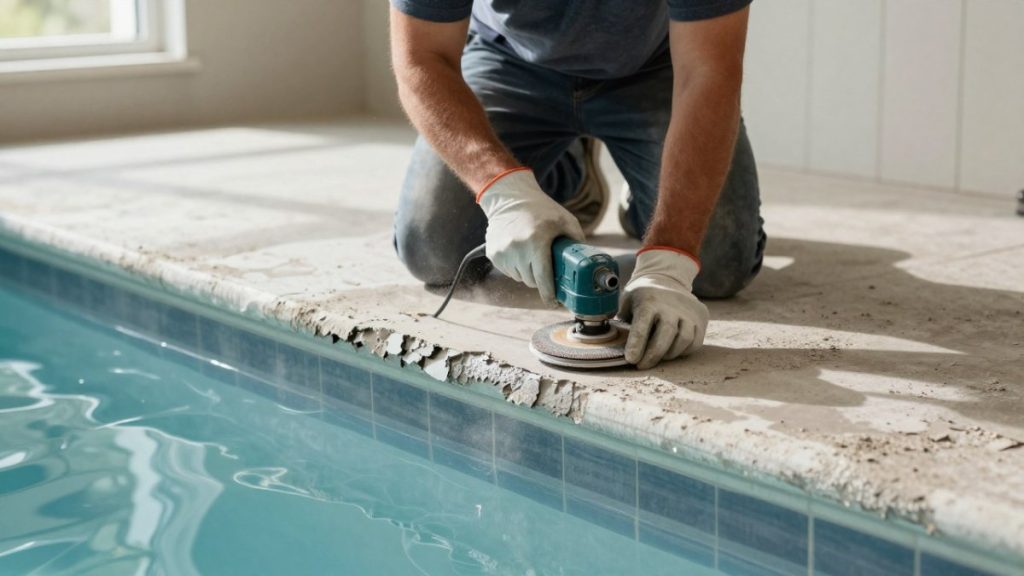
Repair rough pool plaster by matching the fix to the cause: sanding for light scaling, acid wash for mineral stains and mild etching, patching for small chips, and resurfacing for widespread roughness or thin plaster. Test your water first, because unbalanced chemistry will ruin any repair.
- Rough plaster comes from calcium scaling, etching, or plaster wear, and each needs a different repair.
- Sanding suits light scaling and minor texture, but lasts only months to a few years.
- Resurfacing is the only long-lasting option when roughness covers most of the pool.
- Acid washing, widespread etching repair, delamination fixes, and resurfacing all require draining the pool.
- Test pH and calcium hardness weekly to stop rough plaster from returning.
Table of Contents
- Why Pool Plaster Turns Rough and What It Signals
- Your Repair Options Compared: Sanding, Acid Wash, Patching, and Resurfacing
- Pool Plaster Repair Without Draining: What Is Realistic
- Underwater Pool Plaster Repair for Small Defects
- Using a Pool Plaster Repair Kit for Minor Surface Damage
- Pool Plaster Delamination Repair: When the Surface Is Coming Loose
- Preventing Rough Plaster From Coming Back
- Schedule a Pool Surface Assessment Before the Damage Spreads
- Frequently Asked Questions
Why Pool Plaster Turns Rough and What It Signals
Rough pool plaster surface repair options start with understanding what made the rough pool plaster that way in the first place. A gritty, sandpaper-like feel underfoot is not normal aging. It is a signal that the plaster’s top layer has changed chemically or worn away, and the fix depends entirely on which one happened.
Homeowners often notice the texture of rough pool plaster before anything else. Roughness is an early warning sign. Staining, cracking, and delamination can follow later.
The Three Causes Behind a Gritty Surface
Pool plaster turns rough for three main reasons, and each one calls for a different repair.
- Calcium scaling: Minerals from hard water deposit on the surface and harden into a crust.
- Etching: Low pH or aggressive water eats into the plaster, leaving a pitted, chalky texture.
- Plaster wear: After years of service, the finish simply thins and exposes the aggregate underneath.
The Pool & Hot Tub Alliance water chemistry guidance explains how unbalanced pH and calcium hardness drive the first two problems. Test your water before you touch the surface. If chemistry is off, any repair you make will fail the same way the original finish did.
Your Repair Options Compared: Sanding, Acid Wash, Patching, and Resurfacing
Four repair paths exist, and choosing the right one comes down to how deep the damage goes. Here is how they compare.
| Method | Best For | Skill Level | Durability |
|---|---|---|---|
| Sanding | Light scaling, minor texture | DIY-friendly | Months to a few years |
| Acid wash | Mineral stains, mild etching | Professional | A few years |
| Patching | Small chips and pits | DIY for tiny spots | Varies by bond |
| Resurfacing | Widespread roughness, wear | Professional only | Long-term |
If the roughness covers most of the pool and the plaster is thin, resurfacing is the only option that lasts. Sanding a worn-out surface just buys time.
If you also have loose or missing tiles, our guide on the best ways to repair pool tiles walks through that repair step by step.
Pool Plaster Repair Without Draining: What Is Realistic
What you cannot do without draining:
- Acid wash the whole surface
- Repair widespread etching
- Fix delamination
- Resurface
These jobs need dry access and proper surface prep. Underwater work is a spot fix, not a restoration. Treat it as maintenance that extends the life of the finish by a season or two, not as a permanent cure.
Underwater Pool Plaster Repair for Small Defects
The catch: the patch must bond to sound plaster. If the edges around the defect crumble when you brush them, the problem is bigger than a spot fix.
Using a Pool Plaster Repair Kit for Minor Surface Damage
Watch out: kits are not formulated for large areas or structural cracks. Using one on a widespread problem wastes money and hides damage that will return.
Pool Plaster Delamination Repair: When the Surface Is Coming Loose
Delamination means the plaster has separated from the shell underneath. You may feel hollow spots, see lifting edges, or find plaster flakes in the filter basket.
If you are seeing these warning signs, our breakdown of the signs you need new pool plaster helps you judge how far the damage has gone.
Preventing Rough Plaster From Coming Back
Rough plaster returns when the water chemistry that caused it goes uncorrected. Prevention is mostly discipline.
- Test pH and calcium hardness weekly.
- Keep pH in the recommended range and adjust alkalinity as needed.
- Brush the walls and floor regularly to stop scale from setting.
- Fix small chips before water gets behind them.
- Have the surface inspected every few years.
The CDC guidance on healthy swimming water reinforces that balanced, clean water protects both the pool surface and the people in it. Consistent testing is the cheapest repair you will ever make.
Schedule a Pool Surface Assessment Before the Damage Spreads
Roughness rarely stays roughness. Left alone, it moves toward etching, delamination, and full resurfacing, and the cost climbs with every stage.
Deck-O-Art is a BBB-accredited, fully insured company in business since 1998. Our personalized consultation and site survey process helps you understand your pool’s needs. If you want guidance on choosing a qualified contractor first, read our guide to hiring pool contractors in McKinney TX.
You can explore our swimming pool and spa services or contact our team to schedule an assessment.
Rough plaster is a warning, not a life sentence. The right repair at the right stage saves you thousands and keeps your pool safe underfoot. Deck-O-Art brings decades of local experience, a mostly in-house crew, and a survey-first approach to every pool surface we assess.
Frequently Asked Questions
Can rough plaster in a pool be repaired?
Yes, in most cases. Light roughness from scale or mild etching can be sanded or acid washed. Small chips, pits, and hairline cracks respond well to patching with a pool plaster repair kit. Deeper roughness across large areas usually means the plaster has worn thin, and full resurfacing gives a longer-lasting result than repeated spot fixes. A surface assessment tells you which category your pool falls into.
Can you repair pool plaster without draining the pool?
For small defects, yes. Small isolated spots can sometimes be addressed while the pool stays full, though this depends on the damage. Larger areas of rough pool plaster, widespread delamination, or full resurfacing require draining so the surface can dry and be properly prepared.
What causes pool plaster to become rough?
Three things do most of the damage: unbalanced water chemistry that etches or scales the surface, calcium scaling from high pH and hard water, and plain age as the plaster wears thin over time. Roughness tends to start in high-traffic areas and spread. Testing and balancing your water regularly is the cheapest way to slow it down.
When should rough pool plaster be patched, resurfaced, or replaced?
Patch when damage is limited to a few small spots and the surrounding plaster is sound. Resurface when roughness covers large areas, the plaster feels thin, or delamination is spreading. Full replacement makes sense when the plaster is at the end of its service life and repeated repairs no longer hold. Our consultation and site survey process can help you consider which option fits your pool.
