
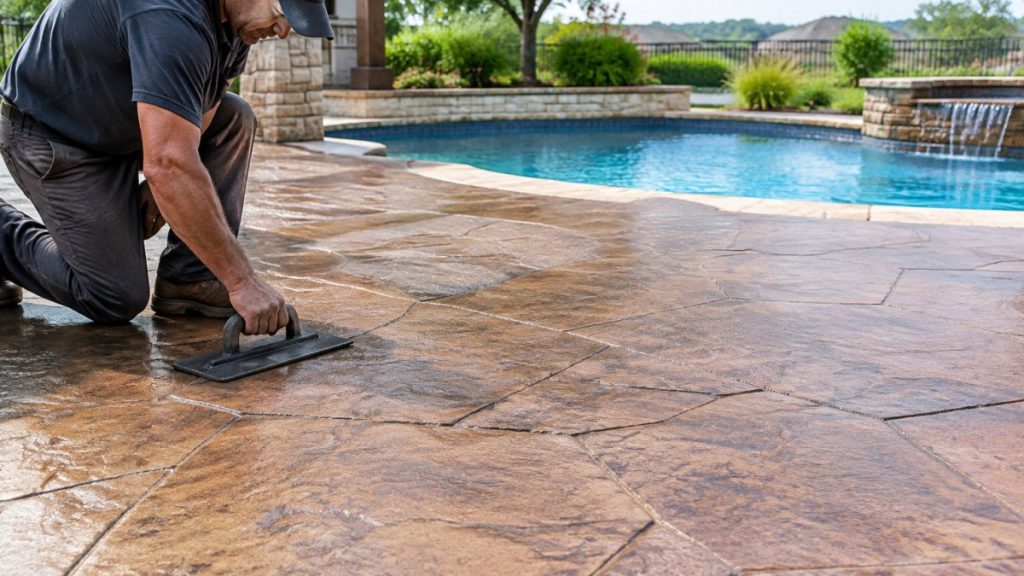
Last Updated: November 5, 2026
Quick Summary
Stamped concrete is durable in Texas when the mix, base, and sealer are built for heat, sun, and shifting clay soil. A well-built, well-sealed slab can last 30-plus years, while a neglected or poorly built one may fail within about 15 years.
- Compacted, graded base prep stops settling and standing water that cracks slabs.
- Expansive clay in North and Central Texas is the quiet culprit behind most random cracking.
- Reseal every 2-3 years, or sooner in hot, sunny climates with heavy traffic.
- A water-bead test every 6 months catches sealer wear before color fades.
- Patios often reach 25 to 30-plus years; driveways typically 15 to 25 years.
Table of Contents
- How Stamped Concrete Holds Up in Texas Conditions
- Stamped Concrete Pros and Cons for Homeowners
- What Determines Stamped Concrete Lifespan in Texas
- Stamped Concrete Resealing Frequency: What to Expect
- Is Stamped Concrete Slippery When Wet?
- A Texas Maintenance Schedule That Protects Your Surface
- Questions to Ask a Stamped Concrete Contractor in McKinney
- Frequently Asked Questions
How Stamped Concrete Holds Up in Texas Conditions
Stamped concrete is durable in Texas, but only when the mix, base, and sealer are built for heat, sun, and shifting clay soil.
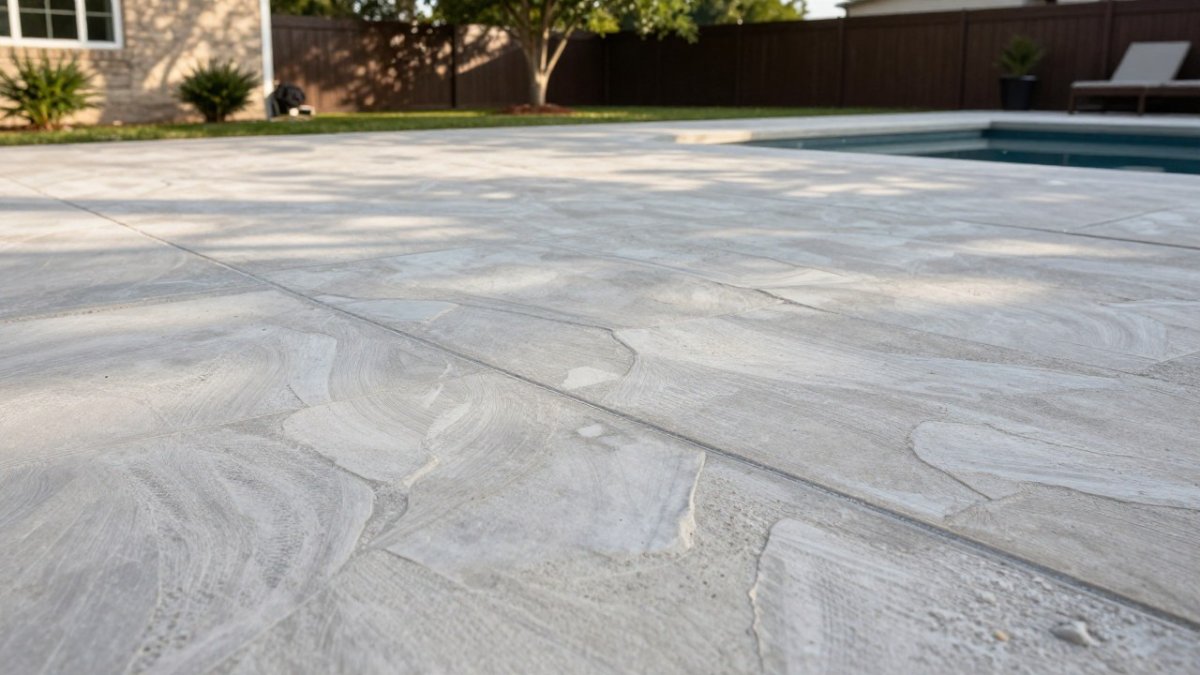
The failures that concrete repairs typically trace back to installation shortcuts, not the material itself.
Texas is hard on any outdoor surface. Summer surface temps climb high enough to stress a sealer.
A properly built slab handles all of it. A thin, rushed pour does not.
Stamped Concrete Pros and Cons for Homeowners
Here is the honest trade-off list we walk every homeowner through before a quote.
Pros:
- Wide design range: mimic natural stone, slate, brick, or wood grain
- One continuous surface with no weeds pushing through joints
- Lower installed cost than natural stone or pavers in most cases
- Easy to clean with a broom and a hose
- Resurfacing can revive an old, ugly slab instead of tearing it out
Cons:
- Cracks can appear as the soil moves, and no pour is crack-proof
- Color fades under strong sun without resealing
- Wet sealer can be slick if the wrong finish is used
- Repairing a stamped pattern is harder to blend than plain concrete
- Poor installation is expensive to undo
Stamped concrete fits well into a broader hardscape plan, especially when it ties a patio to a pool deck or walkway. If you want to see how it pairs with other outdoor living features, our hardscaping for outdoor living services in McKinney page covers the full range of options.
What Determines Stamped Concrete Lifespan in Texas
A stamped concrete lifespan in Texas runs from about 15 years on a neglected, poorly built slab to 30-plus years on a well-built, well-sealed one. The material is rarely the limiting factor. The build is. But “Texas” is not one climate, and the factors that decide lifespan shift as you move across the state.
The build factors that matter most
Five things decide how long your surface lasts, and they matter everywhere in the state:
- Base preparation. Compacted, graded base stops settling and standing water. A base that is not compacted in lifts will settle unevenly and crack the slab above it.
- Concrete mix. The right strength and air content for the local climate matters. In freeze-prone areas, air-entrained mix helps the paste survive freeze-thaw cycles; in the hottest, driest areas, mix design and curing matter more than air content.
- Reinforcement. Rebar or mesh holds the slab together when soil moves. Reinforcement does not stop cracking; it keeps cracks from opening into trip hazards.
How Texas regions change the durability math
The state spans several distinct stress profiles, and a slab that thrives in one can fail early in another:
- North and Central Texas (expansive clay). The black and gray clay soils swell when wet and shrink when dry, and that cycle pushes and pulls on every slab. This is the quiet culprit behind most random cracking in the region. Good base prep, reinforcement, and correctly placed control joints give the concrete room to move without failing.
- West Texas (heat, sun, low humidity). UV exposure is intense and surface temperatures climb high enough to stress a sealer. Color fading and sealer breakdown happen faster here, so resealing intervals shorten. Curing is also harder because moisture leaves the slab quickly.
- Gulf Coast and South Texas (humidity, heavy rain, salt air). Moisture and salt accelerate sealer wear and can drive efflorescence and mildew. Drainage and slope matter more than almost anywhere else, and sealer choice should account for persistent damp.
- Panhandle and North Texas (occasional freezes). Freeze-thaw cycles are less frequent than in northern states but still real. Water that gets into a crack and freezes will widen it, so air-entrained mix and prompt crack repair pay off.
A common pattern is that homeowners compare quotes from contractors who build for one regional profile and apply it everywhere. Ask specifically how the bid accounts for your soil and your local weather pattern.
Realistic lifespan by use
Lifespan also depends on what the surface is asked to do:
- Patios and covered outdoor living areas: often 25 to 30-plus years with regular sealing and light traffic.
- Walkways and pool decks: typically 20 to 30 years, with pool decks needing more attention to drainage and slip resistance.
- Driveways: often 15 to 25 years, because vehicle weight and tire traffic accelerate wear and make crack repair more urgent.
These ranges assume a well-built slab and a consistent resealing routine. A neglected driveway can fall to the low end of its range, while a well-maintained patio can exceed the high end.
Watch out: skipping control joints to keep a cleaner look almost always leads to random cracking within a few seasons, and no sealer or stamp pattern will hide that.
Stamped Concrete Resealing Frequency: What to Expect
Resealing intervals depend on local sun, heat, and traffic, and surfaces in hot, sunny climates generally need resealing more often than those in milder ones.
A simple test tells you when it is time. Drip a little water on the surface. If it beads up, the sealer is still working.
Resealing frequency depends on a few factors:
- Sun exposure: full-sun patios fade and wear faster
- Traffic: driveways and busy pool decks need it more often
- Finish: some sealers wear down quicker than others
- Cleaning habits: harsh cleaners strip sealer early
One of our customers, Sandra Peterson, had us add color to her stamped concrete and reseal it.
Is Stamped Concrete Slippery When Wet?
Stamped concrete can be slippery when wet, but the finish decides that, not the material. A smooth, heavily sealed surface holds water and gets slick.
This matters most around pools. Wet feet plus a slick deck is a real safety risk, and it is avoidable at the pour and seal stage.
What improves grip:
- A broom or textured finish instead of a polished one
- Anti-slip additives mixed into the sealer
- Proper drainage so water does not pool on the surface
- Regular cleaning to stop mildew growth, which adds its own slick film
Drainage is half the safety story. Our pool and patio decking in McKinney work builds slope and drainage into every project for exactly this reason.
A Texas Maintenance Schedule That Protects Your Surface
A little routine care adds years to any stamped surface. Here is the schedule we give homeowners after every install, followed by the seasonal inspection habits and repair decisions that keep a slab from turning into a replacement project.
| Task | How Often | Why It Matters |
|---|---|---|
| Sweep or blow off debris | Weekly | Stops grit from dulling the finish |
| Wash with mild soap and water | Every 2-3 months | Removes dirt and early mildew |
| Water-bead sealer test | Every 6 months | Catches wear before color fades |
| Full reseal | Every 2-3 years | Restores UV and water protection |
| Inspect joints and edges | Each spring | Spots small cracks before they spread |
| Clear drains and low spots | Before rainy season | Prevents standing water damage |
A seasonal walkthrough
Treat the schedule as a baseline and adjust it to the season:
- Spring (before heavy rain): Walk the slab and clear drains, gutters, and low spots so water sheets off instead of pooling. Check joints and edges for hairline cracks and seal any you find before the wet season pushes water into them.
- Summer (peak sun and heat): This is when sealer wears fastest. Run the water-bead test monthly rather than every six months, and watch for chalky or faded patches that signal UV breakdown. Avoid washing in the heat of the day.
- Fall (before occasional freezes): Repair small cracks so water cannot get in and freeze. Confirm slope still directs water away from the slab and the house.
- Winter (freeze-prone areas): Keep the surface clear of standing water and debris. Avoid de-icing salts where possible, since they can attack the surface and sealer.
Signs your sealer needs attention
The water-bead test is the simplest check: if water beads up, the sealer is still working; if it soaks in, the surface is exposed. Other signs include a chalky or powdery look, color that has gone flat, and a surface that stays dark and damp longer than it should after rain. Catching these early is the difference between a reseal and a recolor.
Repair and long-term ownership costs
Stamped concrete is repairable, but the visual difficulty is higher than with plain concrete because a patch has to blend with the stamp pattern and color. Small cracks can often be routed, filled, and recolored; larger or repeated cracks may point to a base or drainage problem that patching will not solve.
A few habits prevent most surface damage:
- Clean spills quickly, especially anything oily
- Avoid harsh acid cleaners that strip sealer
- Keep heavy traffic off fresh sealer for the full cure time
- Fix small cracks early, before water gets in and freezes
Most patio decking mistakes come down to neglect, not bad concrete. Our guide to patio decking mistakes homeowners should avoid walks through the ones we see most often.
Questions to Ask a Stamped Concrete Contractor in McKinney
Ask these before you sign anything. The answers tell you more about durability than any brochure.
- How do you prepare and compact the base?
- What mix and reinforcement do you use for our soil?
- Where will you place control joints?
- What sealer do you use, and how often will it need resealing?
- Do you handle drainage and grading?
- Do you use your own crew or subcontractors?
- What does your warranty cover, and for how long?
That last question matters. A contractor who stands behind the work will explain the warranty in plain terms. We are BBB-accredited and fully insured, and our workforce is mostly in-house.
If you are ready to talk through your project, you can contact us to set up a consultation. You can also review our concrete installation services in McKinney to see what a full build involves.
Frequently Asked Questions
How long does stamped concrete last in Texas?
With professional installation and regular sealing, stamped concrete in Texas typically lasts 25 to 30 years or more. The biggest variables are base preparation, control joints, and whether the surface is resealed every two to three years. Driveways under heavy traffic and patios exposed to full sun and expansive clay soil sit at the lower end of that range; covered or shaded surfaces with consistent maintenance sit at the upper end.
What is the downside of stamped concrete?
The main drawbacks are cracking risk if the base and joints are done poorly, color fading under strong UV exposure, and the ongoing cost of resealing every two to three years. It can also become slick when wet if the sealer or texture is wrong. Compared with pavers, stamped concrete is harder to repair section by section, since a patch often shows. Most downsides trace back to installation quality rather than the material itself.
How often does stamped concrete need to be resealed?
In North Texas, plan on resealing every two to three years. Surfaces in full sun or around pool splash zones often need it closer to every two years, while shaded patios can stretch to three. Test by sprinkling water on the surface: if it soaks in rather than beading, the sealer has worn thin. Resealing frequency also depends on the sealer type, with penetrating sealers generally lasting longer than film-forming ones.
Is stamped concrete slippery when wet?
Stamped concrete can be slippery, especially when wet and sealed with a glossy film-forming product. The fix is a textured stamp pattern, a slip-resistant additive in the sealer, or a matte penetrating sealer that leaves more grip. Around pools, ask your contractor specifically about slip resistance and how the finish will perform on a wet surface. Texture and sealer choice matter more than the stamp pattern itself.
Texas heat, clay soil, and heavy rain will test any outdoor surface. The good news is that stamped concrete, built and sealed correctly, handles all three for decades. Deck-O-Art brings a personalized consultation and site survey, in-house crews, and drainage-first planning to every McKinney project. Get started with Deck-O-Art and build a patio that still looks sharp ten summers from now.
