
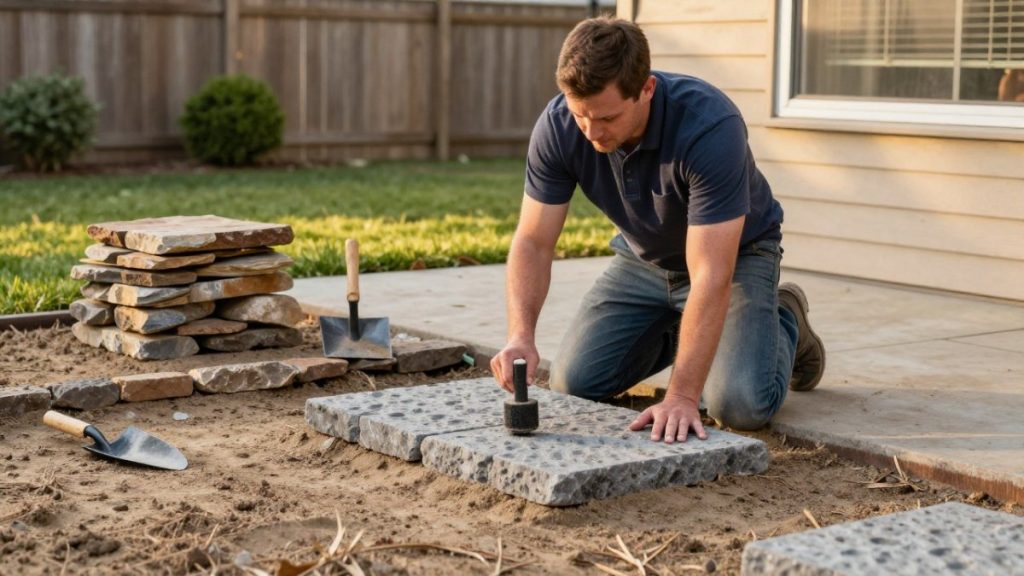
Last Updated: November 14, 2026
Quick Summary
Hiring professional hardscaping services in McKinney means choosing a contractor based on base preparation, drainage planning, and written contract terms rather than price per square foot. Request insurance certificates, compare estimates line by line, and confirm who pulls permits before work begins.
- Ask five questions before signing: who performs the work, what is in writing, drainage, warranty, and failure recourse.
- Compare estimates by matching line items such as base preparation, drainage, materials, demo, permits, warranty, and payment schedule.
- Installation starts with layout and excavation, and you should inspect the compacted base before the surface covers it.
- North Texas expansive clay soil demands a properly compacted, well-drained base to prevent movement damage.
- Deck-O-Art has operated since 1998 as a BBB-accredited, fully insured company with a mostly in-house workforce.
Table of Contents
- Why McKinney Homeowners Hire Professional Hardscaping Services
- Hardscape Contractor Questions to Ask Before You Hire
- What Drives Hardscape Project Cost in McKinney
- Yard Drainage Solutions That Protect Your Patio and Pool Deck
- What Hardscape Installation Day Actually Looks Like
- Local Climate, Soil, and Drainage Considerations for North Texas Yards
- Book a Site Survey with Deck-O-Art
- Frequently Asked Questions
Why McKinney Homeowners Hire Professional Hardscaping Services
Hiring professional hardscaping services in McKinney is the difference between a backyard that survives a decade of North Texas weather and one that starts cracking after two summers. Hardscaping is the built, non-living layer of a landscape: patios, walkways, retaining walls, pool decks, outdoor kitchens, and the drainage that keeps all of it dry. This distinction often gets blurred, and it can cost homeowners real money.
Here is the part most guides get wrong. People shop for hardscaping on price per square foot, then discover the expensive problems later: a patio that ponds after every storm, a retaining wall without proper base compaction, or a pool deck that turns slick when wet. The material is rarely the failure point. The prep work underneath it is.
Below, we break down what to ask, what drives cost, and how installation actually runs, so you can compare providers on substance rather than curb appeal alone. You can also review our hardscaping services in McKinney to see the specific work we take on.
What Hardscaping Covers Beyond Landscaping
Landscaping manages living elements: lawns, planting beds, trees, and irrigation. Hardscaping covers the structural surfaces and features that define how you use the yard. That typically includes:
- Patios and pool decks in pavers, stamped concrete, or stone
- Walkways and garden paths
- Retaining walls and grading structures
- Outdoor kitchens, fire features, and seating walls
- Drainage systems tied to the hardscape footprint
A common mistake is hiring a lawn care crew for structural work. Mowing and garden design are different trades from paver installation and stonework, and the base preparation standards are not comparable.
Hardscape Contractor Questions to Ask Before You Hire
Ask any hardscape contractor five questions before signing: who performs the work, what is in writing, how is drainage handled, what is the warranty, and what happens if something fails. The answers separate a professional landscaper from a crew that disappears after the invoice clears.
What most guides miss is that the answers matter more than the portfolio. A beautiful patio photo tells you nothing about base depth, compaction, or slope.
Watch out: A verbal promise that “we’ll take care of any issues” is worth nothing once the crew has left. Get every commitment in the contract.
Licensing, Insurance, and Written Contracts
Request a certificate of insurance showing general liability coverage, and confirm the policy is current by calling the insurer directly. Ask whether workers are employees or subcontractors.
A written contract should specify the scope, materials and brands, base preparation method, drainage plan, payment schedule, start and completion dates, and warranty terms. Anything not written down is a future dispute.
What Drives Hardscape Project Cost in McKinney
Hardscape project cost is driven by square footage, material choice, site access, and subsurface conditions, not by a single flat rate. Two patios of identical size can price very differently once excavation, grading, and drainage enter the picture. The useful way to read a bid is to understand which of those drivers each line item is paying for.
The Cost Drivers, Explained
- Materials: pavers, natural stone, and stamped concrete sit at different price points, and within each category grade and thickness matter. A thicker paver rated for vehicular traffic costs more than a thin veneer unit, and the difference shows up in the base requirements too.
- Base and excavation: removing an old surface, hauling spoils off site, and compacting base in lifts all consume labor and equipment hours. Deeper base for heavier loads or poor soils adds cost that a flat per-square-foot quote hides.
- Drainage: French drains, channel drains, and regrading are separate scopes. A bid that excludes drainage is not a cheaper patio; it is a patio plus a future water problem.
- Labor and complexity: curves, steps, elevation changes, and tight access slow installation. A backyard reachable only by wheelbarrow costs more to build than one a skid steer can enter.
- Add-ons: lighting, fire features, outdoor kitchens, and sealing are priced as separate line items and should appear as such.
Pricing depends on site conditions, so a site survey is the way to get an accurate number. Contact Deck-O-Art for a current quote.
How to Compare Hardscaping Estimates Line by Line
Compare estimates by matching line items, not totals. A low bid usually means something was left out, and it is rarely the thing you wanted cut.
| Line Item | What to Check | Why It Matters |
|---|---|---|
| Base preparation | Depth, material, compaction method | Prevents settling and cracking |
| Drainage | Slope plan, drains included or excluded | Stops standing water |
| Materials | Brand, grade, thickness specified | Affects durability and cost |
| Demo and haul-off | Old surface removal included | Common hidden charge |
| Permits | Who pulls them and who pays | Avoids stop-work surprises |
| Warranty | Length and what it covers | Defines your recourse |
| Payment schedule | Deposit and milestone terms | Protects your cash flow |
If one bid is dramatically lower, find the missing line before celebrating. Ask each contractor to explain, in writing, how they arrived at their base depth and drainage scope; the answers reveal whether the number is real.
Planning, Permits, and Timelines
Set expectations before work begins. A typical sequence runs: consultation and site survey, design and material selection, a written contract, permit review where applicable, then installation in stages. Permit and inspection requirements vary by jurisdiction, so confirm with the local building department what your project needs and who is responsible for pulling the permit.
Timelines depend on scope and weather. A straightforward patio may take days; a project with walls, drainage, and an outdoor kitchen can run weeks, plus lead time for materials. Ask for a start date, a completion estimate, and how weather delays are handled in the contract. A contractor who cannot describe the sequence and the permit path is not ready to quote a firm number.
Yard Drainage Solutions That Protect Your Patio and Pool Deck
Yard drainage solutions belong in the hardscape plan from the start, not added after standing water appears. Water that pools against a pool deck or patio edge finds its way under the surface, and that is where structural damage begins.
Common options include surface regrading, channel drains, French drains, and downspout extensions. The right combination depends on your lot’s slope and soil. If standing water around your pool or patio is already a problem, our drainage solutions for pools and spas address it directly.
What Hardscape Installation Day Actually Looks Like
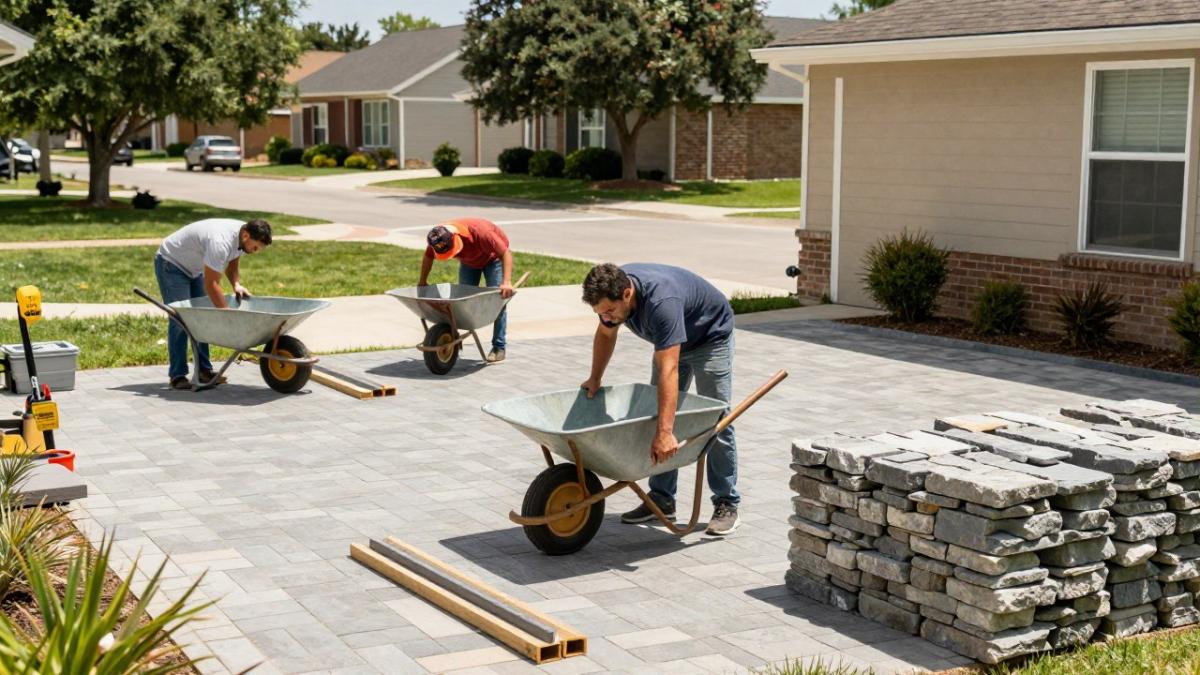
Installation day is mostly prep. Installation typically starts with layout and excavation, not with laying pavers. Knowing the stages lets you verify the work at the moments that matter, because once a base is covered, you cannot inspect it.
The Stages, and What to Check at Each
- Layout and marking. The crew stakes the footprint and confirms elevations against the plan. Check that the layout matches the approved design and that slopes direct water away from the house and pool.
- Excavation and haul-off. Old surfaces come out and spoils leave the site. Confirm the excavation depth matches the base specification in the contract.
- Grading for drainage. The subgrade is shaped so water moves to the intended low points or drains. This is the stage to ask where water will go in a heavy storm.
- Base compaction in lifts. Base material goes down in layers and is compacted between them. Ask to see the base before the surface goes on; this is the single most common point of failure.
- Edging and surface installation. Edging restrains the pavers, then the surface material is laid, cut, and fitted at edges and steps.
- Cleanup and sealing. The site is cleaned, and sealer is applied if the contract specifies it.
Expect noise, deliveries, and a staging area for materials. Plan for vehicles and equipment access, and keep pets and children clear of the work zone.
Watch out: Ask to see the base stage before it gets covered, and note in the contract that base depth and compaction method are specified.
Materials and Maintenance Trade-Offs
Every material trades something.
Pick the material that matches your maintenance appetite, not just the photo you liked. Ask the contractor how each option performs in your soil and weather, and get the maintenance schedule in writing.
If you want to see the range of decking work involved, review our pool and patio decking services before the crew arrives.
Local Climate, Soil, and Drainage Considerations for North Texas Yards
North Texas yards deal with expansive clay soils, intense summer heat, and heavy storm bursts. Clay swells when wet and shrinks when dry, and that movement is brutal on anything built without a properly compacted, well-drained base.
Grading matters more here than in milder climates. Surfaces must slope away from the house and pool, and drainage must move water off the hardscape quickly during a downpour. For a deeper walkthrough of the problem, read our guide on how to fix standing water in a backyard.
Book a Site Survey with Deck-O-Art
The gap between a hardscape that lasts and one that fails comes down to the survey, the base, and the drainage plan. That is where we start every project. Deck-O-Art has been in business since 1998 as a BBB-accredited, fully insured company, with a mostly in-house workforce handling pool and spa renovations, custom patio decking, and hardscaping. Our personalized consultation and site survey process is designed to plan your project before a quote is given.
Get started with Deck-O-Art and build an outdoor space that holds up to North Texas weather. Contact us to schedule your site survey.
Most homeowners in McKinney are not short on patio ideas; they are short on trustworthy information about what sits under the patio. Bring us your drainage concerns, your material questions, and your budget range. We will walk the property, explain what we find, and put the scope in writing so you can compare it against any other estimate with confidence.
Frequently Asked Questions
What should I look for when hiring a hardscaping contractor?
Check for a current business registration, liability insurance, and a written contract that spells out scope, materials, payment schedule, and warranty terms. Ask whether the crew is in-house or subcontracted, since that affects scheduling and accountability. A contractor who walks the site, measures drainage, and explains the build sequence before quoting is showing you how they work, not just what they charge.
How is hardscape project cost determined?
Most hardscape project cost comes down to square footage, material choice, site access, and how much base prep and drainage work the yard needs. Tearing out an old deck, correcting grading, or adding a retaining wall raises the total. Ask for a quote broken into labor, materials, excavation, and drainage so you can compare bids fairly. Deck-O-Art provides estimates after a personalized consultation and site survey, since pricing depends on the specific project.
Can hardscaping fix standing water around my pool or patio?
Often yes, when the cause is surface grading, compacted soil, or a downspout dumping water where it can’t drain. Yard drainage solutions can redirect water away from the structure. The fix has to be designed around your lot’s slope and soil, so a site survey comes first. If the problem is a deeper water table or a failed foundation drain, the contractor should tell you that plainly rather than pour concrete over it.
How long does a typical hardscape installation take?
Project duration depends on scope, weather, and material lead times. Weather, material lead times, and permit requirements affect the schedule. Ask for a written timeline with milestones and a clear answer on what delays the crew. A contractor who builds in time for base compaction and curing is protecting the finished surface, not padding the schedule.
