
Last Updated: November 15, 2026
Quick Summary
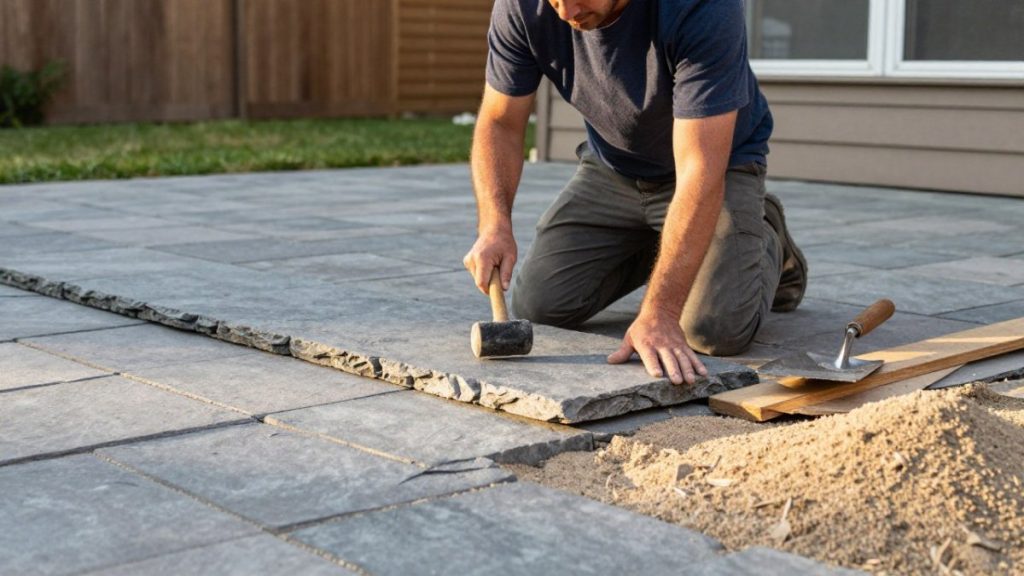
Professional hardscape installation is the design, excavation, base preparation, drainage engineering, and finishing of outdoor surfaces by trained crews using compacted structural layers and code-compliant methods. It delivers better curb appeal, stronger resale value, and drainage that protects your foundation, while DIY shortcuts like hand-tamping and eyeballed slopes often fail within a few winters.
- Professional crews excavate to depth and machine-compact the base in lifts, while DIY jobs are often too shallow.
- Hardscape drainage solutions include surface grading, channel drains, French drains, and permeable base layers.
- Concrete pavers can be lifted and reset individually, while a cracked stamped concrete slab needs patching or replacement.
- Ask a contractor who performs the excavation and base work, how they handle drainage, and what happens if something fails.
- Retaining walls above a certain height and outdoor kitchen electrical work typically require permits that vary by jurisdiction.
Table of Contents
- Why Professional Hardscape Installation Beats DIY
- Curb Appeal and Outdoor Living Space: The Immediate Payoff
- The Impact of Hardscaping on Property Value
- Hardscape Drainage Solutions That Prevent Water Damage
- Structural Integrity, Materials, and Long-Term ROI
- How to Choose a Hardscape Contractor
- Permits, Safety Standards, and Accessibility Compliance
- Planning Your Hardscape Project with Deck-O-Art
- Frequently Asked Questions
Why Professional Hardscape Installation Beats DIY
The most common hardscape mistake we see is a homeowner treating a patio like a weekend furniture project. Professional hardscape installation is the design, excavation, base preparation, drainage engineering, and finishing of outdoor surfaces by trained crews using compacted structural layers and code-compliant methods.
Across North Texas yards, the homeowner who rents a plate compactor and eyeballs the slope often ends up paying more to fix the failure than the original job would have cost.
Below, we break down the seven benefits that matter most, including the ones most guides skip: drainage engineering, material science, and long-term return.
DIY vs. Professional Installation at a Glance
| Factor | DIY Installation | Professional Installation |
|---|---|---|
| Base preparation | Hand-tamped, often too shallow | Excavated to depth, machine-compacted in lifts |
| Drainage planning | Slope guessed by eye | Graded to drain away from structures |
| Material selection | Whatever the store stocks | Matched to soil, climate, and load |
| Permits and code | Frequently overlooked | Handled before work begins |
| Failure risk | High with freeze-thaw and clay soil | Managed through engineering |
| Long-term cost | Lower upfront, higher repair risk | Higher upfront, fewer callbacks |
Curb Appeal and Outdoor Living Space: The Immediate Payoff
Hardscaping changes how a yard functions, not just how it looks.
Curb appeal is the first thing a visitor or buyer notices. A crisp paver walkway, a level patio, and clean edging signal that the property is maintained.
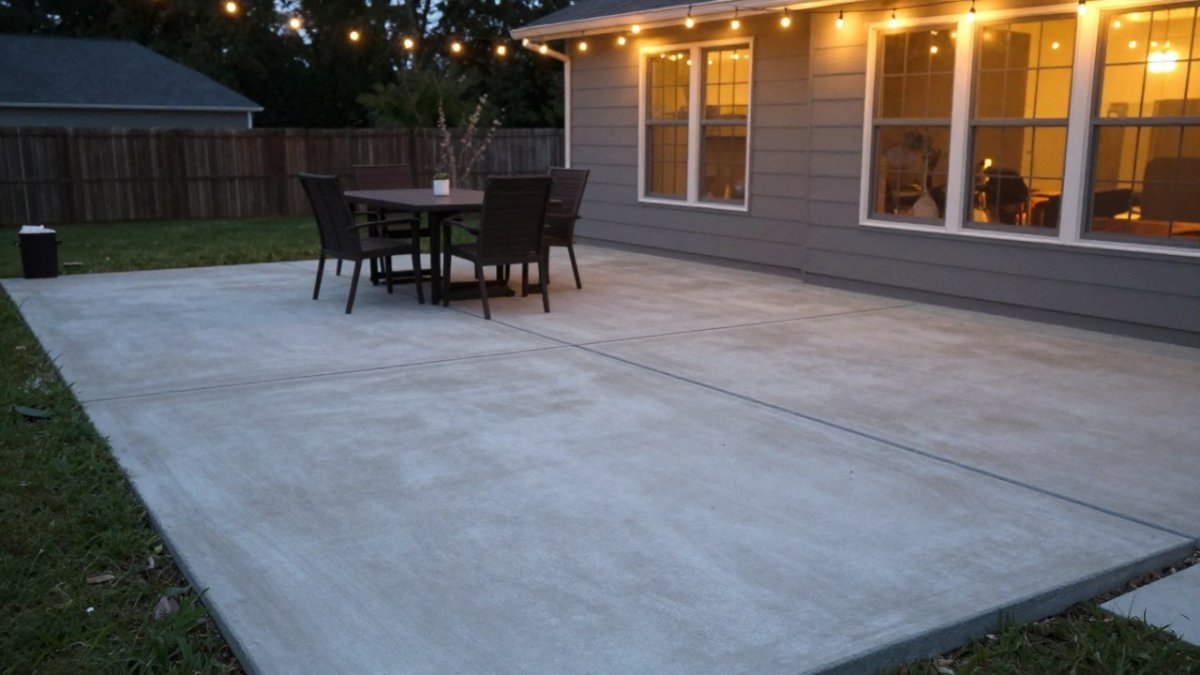
The payoff fades fast if the surface shifts or holds water. If you are already picturing the finished result, it helps to understand how uneven patio pavers are fixed so the surface you picture stays level for years.
The Impact of Hardscaping on Property Value
Most guides stop at “hardscaping adds value.” That is true but useless for a homeowner deciding whether to spend the money. The more honest framing is a return-on-investment comparison: how does a professionally installed hardscape perform against the other upgrades competing for the same budget?
A hardscape is one of the few home improvements that adds usable square footage outdoors. Buyers pay for function, and a patio, outdoor kitchen, or fire feature extends the living area without adding a roof.
The impact of hardscaping on property value depends on three things: whether the work is permitted and inspected, whether it drains correctly, and whether the materials suit the climate. A patio that puddles or cracks detracts. A patio that performs adds. Those three variables are also what separate a professional installation from a DIY one, which is why the ROI question and the installation-quality question are the same question.
How Hardscaping ROI Compares to Other Upgrades
A useful way to think about it is cost recovery rather than sticker price. The return on exterior hardscape projects at resale varies widely and depends on whether the work is permitted and inspected, whether it drains correctly, and whether the materials suit the climate. The comparison that matters is against the alternatives:
- Softscaping (lawn, beds, trees): Lower upfront cost, but plants are perishable. A hardscape is a structural asset that does not die, thin out, or need replanting after a hard freeze. Over a ten-year horizon, the maintenance and replacement savings narrow the upfront gap considerably.
- Interior renovations (kitchen, bath): Higher cost per square foot and a longer payback in most markets.
Watch out: the ROI case collapses if the work is unpermitted or drains poorly. An unpermitted retaining wall or a patio that pushes water toward the foundation can become a disclosure item at sale and a negotiation liability, which is the opposite of value.
We tell homeowners to think of hardscaping as a long-term investment rather than a cosmetic expense. It is one of the few exterior upgrades that improves both daily enjoyment and resale appeal at the same time, provided it is engineered, permitted, and built to drain.
Hardscape Drainage Solutions That Prevent Water Damage
Water is the number one enemy of any hardscape, and it is the piece most DIY jobs get wrong.
In North Texas, clay-heavy soil absorbs water slowly. A patio pitched even slightly toward the house can push water into the foundation over a single rainy season.
Watch out: skipping a drainage plan to save time is the single most expensive shortcut in hardscaping. If you already have pooling issues, our guide on how to fix standing water in a backyard walks through the underlying causes.
Structural Integrity, Materials, and Long-Term ROI
Structural integrity is what separates a hardscape that lasts from one that fails. It comes from proper excavation depth, a compacted aggregate base, correct jointing, and materials chosen for the load and climate the surface will face. Each of those is a mechanism, not a slogan, and understanding them is how you evaluate a bid.
Why Material Choice and Site Assessment Decide Longevity
Concrete pavers, natural stone, and stamped concrete each behave differently under freeze-thaw cycles and heavy sun. The differences are not cosmetic; they determine how the surface moves, cracks, and drains over time.
- Concrete pavers are individual units set on a compacted base with sand-filled joints. Because the units are discrete, the surface can flex slightly with minor ground movement without a continuous crack propagating across the patio. Individual units can also be lifted and reset if a base issue appears, which is a real maintenance advantage. The trade-off is a higher unit cost and a joint system that must be refilled periodically.
- Natural stone (flagstone, travertine, bluestone) offers the widest range of color and texture and, depending on the stone, excellent freeze-thaw performance. It is also the heaviest and most installation-sensitive option: stone set on an inadequate base will crack or rock, and the repair is labor-intensive because the units are heavy and irregular. Stone also varies batch to batch, so the material must be selected and laid with more care.
- Stamped concrete is a continuous slab with a patterned surface. It is typically the lowest cost per square foot of the three and can mimic pavers or stone convincingly. The trade-off is that a continuous slab cracks when the base moves, and the fix is a visible patch or a full replacement rather than a single-unit swap. Joints and reinforcement must be engineered correctly, and the surface needs resealing to hold its color.
A site assessment checks soil conditions, elevation changes, and how water moves across the property. That assessment decides the base depth, the material, and the jointing method. Clay-heavy soil, common in many parts of the country, expands and contracts with moisture and holds water far longer than sandy soil, which is why the same paver detail can perform well on one lot and fail on the next.
The Failure Mechanisms DIY Misses
The ‘hidden’ risks of DIY are not mysterious. They are predictable structural failures that show up on a schedule:
- Settling and heaving: A base that is too shallow or not compacted in lifts will consolidate under load, and the surface will dip or rock. In freeze-thaw climates, water trapped in the base expands and lifts the surface, which is why excavation depth and drainage are linked.
- Drainage failure: A slope that is eyeballed rather than graded can push water toward the house or pool. The result is not just a puddle; it is base erosion, staining, and in the worst case water against the foundation.
- Joint and edge failure: Missing edge restraint lets pavers migrate outward, opening joints and destabilizing the field. This is a small detail with an outsized effect on longevity.
The Long-Term ROI Math
A properly built hardscape generally needs occasional cleaning and resealing. A failed DIY job can require full removal and rebuild, which adds cost. When you weigh material options, it helps to review the concrete installation services that underpin durability before you commit, and to ask any contractor how they compact the base, how they restrain the edges, and how they handle water at the perimeter.
How to Choose a Hardscape Contractor
Choosing a hardscape contractor is the decision that determines everything else. Look for proof of insurance, a verifiable business history, a written scope, and a crew that does the core work in-house rather than subcontracting it out.
Ask three questions before signing:
- Who actually performs the excavation and base work?
- How do you handle drainage and site assessment?
- What happens if something fails a year from now?
A contractor who answers those specifically is worth a longer conversation. One who deflects is not. When you are ready to talk through your project, you can contact our team to request a quote.
Permits, Safety Standards, and Accessibility Compliance
Permits and code compliance protect you as much as the work. Retaining walls above a certain height, structural changes, and electrical work for outdoor kitchens typically require permits, and requirements vary by jurisdiction. Always confirm the local rules before work starts.
Safety standards matter too. Properly built steps, railings, and slip-resistant surfaces reduce fall risk, and accessibility compliance keeps walkways usable for every member of the household. We build these into the plan from the start rather than retrofitting them later. For official guidance on construction and safety codes, check the International Code Council resources.
Planning Your Hardscape Project with Deck-O-Art
Planning starts with a personalized consultation and site survey. We walk the property, check soil conditions and elevation changes, identify drainage problems, and match materials to how you actually use the yard.
As a BBB-accredited, fully insured company in business since 1998, we keep most of our workforce in-house. That means the crew who designs your project is close to the crew who builds it.
To see the full range of what we build, explore our hardscaping for outdoor living services and book a consultation.
A hardscape is a long-term decision, and the wrong crew can cost you twice.
Frequently Asked Questions
What are the primary benefits of professional hardscape installation?
Professional hardscape installation delivers four main benefits: proper site assessment and base preparation so surfaces do not shift, drainage solutions that move water away from your foundation and pool, durable materials installed to last, and a finished design that raises curb appeal and property value. Crews also handle permitting and safety requirements, which reduces the risk of rework and code problems later.
Does professional hardscape installation increase home resale value?
Hardscaping adds usable outdoor living space, and buyers pay for that. A well-built patio, retaining wall, or outdoor kitchen gives appraisers and buyers a tangible feature to value, while cracked or uneven DIY surfaces can raise questions during inspection. The impact of hardscaping on property value is strongest when the work is done correctly the first time, with proper base depth, grading, and drainage.
How do professional hardscape drainage solutions prevent standing water?
Standing water usually comes from flat or incorrectly graded surfaces and no path for runoff. Professionals run a site assessment to check soil conditions and elevation changes, then build slope into the surface and add drains, French drains, or permeable sections as needed. That keeps water moving away from the pool, patio, and foundation instead of pooling after every storm.
How do I choose a hardscape contractor?
Look for an insured company with a local track record, and ask whether the crew is in-house or subcontracted. Request a site survey and written scope before signing, confirm they handle permitting, and ask what happens if something fails a year later. The clearest signal is a contractor who explains base prep and drainage without being asked.
