
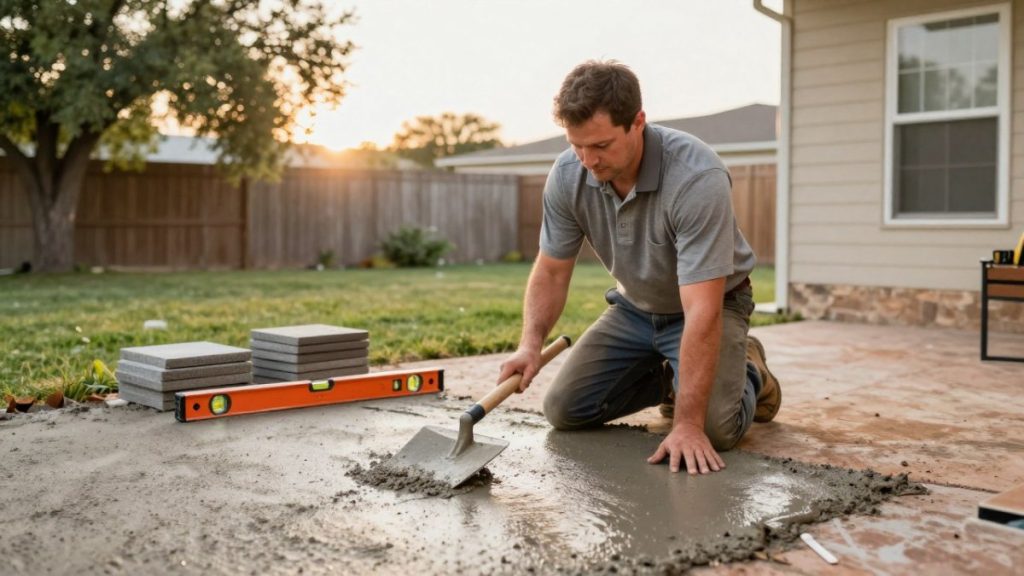
Quick Summary
Here are 5 low maintenance patio surfaces for North in Texas yards, ranked by upkeep, heat comfort and how well each handles drainage and soil movement. Porcelain pavers rank first for minimal upkeep, while decomposed granite offers the lowest upfront cost. Compare each option against how you actually use your backyard.
- Porcelain pavers need very little routine care and rarely require resealing.
- Concrete pavers cost less upfront and individual units are easy to replace.
- Natural stone needs periodic sealing when porous and can get hot in direct sun.
- Decomposed granite drains well and costs less, but shifts underfoot and needs raking.
- A properly excavated, compacted base is essential on North Texas clay soil.
Table of Contents
- Why Surface Choice Matters in North Texas Heat and Rain
- The 5 Low Maintenance Patio Surfaces Ranked
- Comparison Table: Cost, Upkeep, and Heat Performance
- North Texas Patio Materials and Costs: What to Expect
- Maintenance Schedules and Lifetime Upkeep
- Choosing the Right Surface for Your Backyard and Next Step
- Frequently Asked Questions
5 Low Maintenance Patio Surfaces for North Texas Yards
Last Updated: November 22, 2026
Why Surface Choice Matters in North Texas Heat and Rain
Choosing a patio surface in North Texas means planning for heat, heavy rain and clay soil. The surface you pick shapes how often you will clean, seal or repair it for years to come.
Surfaces here face temperature swings, sudden downpours and soil that expands and shrinks. A material that looks great on day one can crack, shift or hold water after a few seasons if it is a poor match for the site. That is why low maintenance should be judged over the full life of the patio, not just at installation.
This guide ranks five low maintenance patio surfaces for North Texas yards. For each one, it explains what the surface does well, where it struggles and who it suits. Pricing varies with quantity, site conditions and delivery, so contact Deck-O-Art for a current quote tailored to your yard.
The 5 Low Maintenance Patio Surfaces Ranked
A useful ranking weighs upkeep, heat comfort and how well each surface handles drainage and movement. No single material wins every category, so use this list to match a surface to how you actually use your backyard.
1. Porcelain Pavers
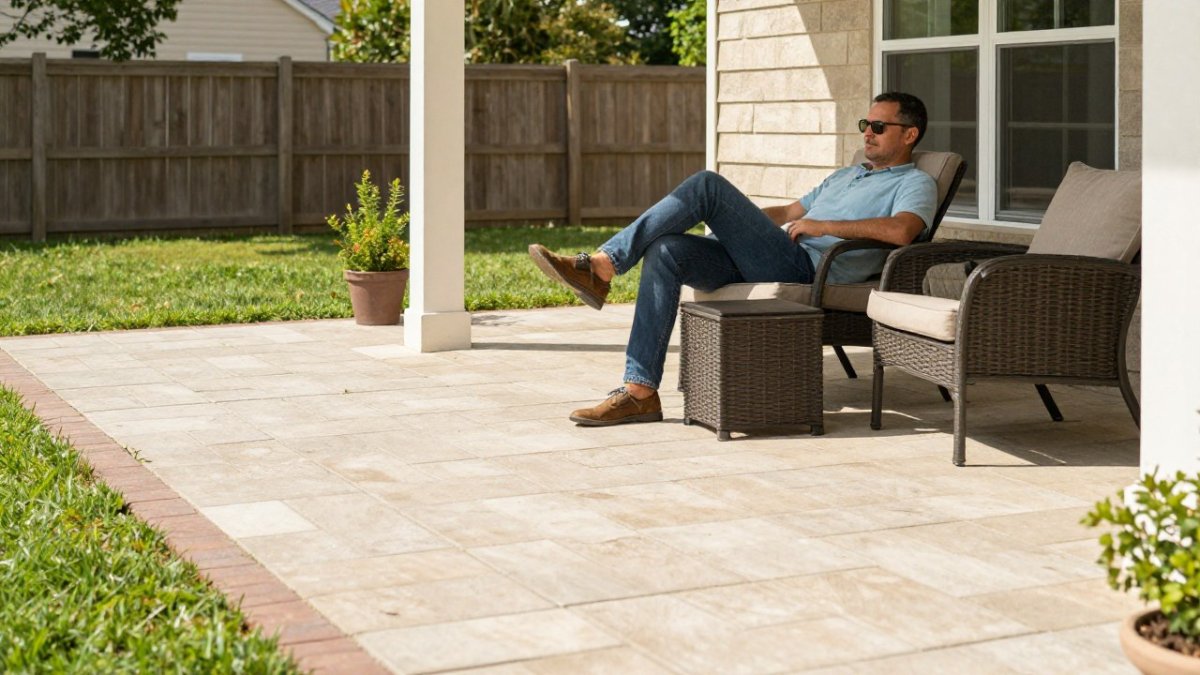
Porcelain pavers are often ranked first for low upkeep. They are dense, resist staining and stay stable across temperature swings. Their sealed surface wipes clean with a hose and mild soap, and they rarely need resealing.
Pros:
- Highly stain and freeze-thaw resistant
- Consistent color and tight joints
- Very little routine maintenance
Cons:
- Higher installed cost than most alternatives
- Lighter colors can feel warm in full afternoon sun
- Requires careful base preparation to prevent cracking
Best for: Homeowners who want a clean, modern look and minimal upkeep.
2. Concrete and Modified Concrete Pavers
Concrete pavers are a common choice in many areas. They are affordable compared with stone, come in many shapes and colors, and repair easily because you can replace a single damaged unit. Modified concrete pavers add a more uniform finish and better color retention.
Pros:
- Lower upfront cost than porcelain or natural stone
- Individual pavers are easy to replace
- Wide range of styles and colors
Cons:
- Can fade over time without occasional sealing
- Joint sand may need topping off after heavy rain
- Weed growth in joints is common without maintenance
Best for: Budget-conscious projects that still need a durable, repairable surface.
3. Natural Stone and Flagstone
Natural stone and flagstone bring an organic, high-end look. Many stones handle North Texas heat well, but surface temperature varies by type and color, and some stones are porous. Sealing helps protect them from stains and moisture.
Pros:
- Distinctive, natural appearance
- Durable when properly installed and sealed
- Good slip resistance in many textures
Cons:
- Irregular shapes make installation more labor-intensive
- Porous varieties need periodic sealing
- Some stones get hot in direct sun
Best for: Homeowners seeking a rustic or upscale backyard feel.
4. Brick Pavers
Brick pavers offer a classic look that suits traditional homes. Fired clay holds color well and resists many stains, but the joints need attention. Sand washout and shifting can occur if the base was not compacted correctly.
Pros:
- Timeless appearance that complements brick homes
- Strong, long-lasting material
- Individual units can be replaced
Cons:
- Joints require periodic re-sanding
- Efflorescence can appear on some bricks
- Weeds can establish in the joints
Best for: Traditional properties and homeowners who prefer a warm, familiar look.
5. Decomposed Granite
Decomposed granite is a gravel-like surface that drains well and costs less than most paved options. It suits informal seating areas and garden paths more than heavy-use patios. It needs a stabilized base and an edging system to stay in place.
Pros:
- Excellent drainage and permeability
- Lower cost and simple installation
- Natural, relaxed look
Cons:
- Shifts underfoot and is less accessible
- Requires periodic raking and topping up
- Weed control is necessary
Best for: Casual spaces, drainage-prone areas and garden-style yards.
Comparison Table: Cost, Upkeep, and Heat Performance
A qualitative table is a starting point, but the factors that actually separate these five surfaces in North Texas are installed cost, barefoot surface temperature, wet slip resistance, and how each one behaves over expansive clay soil. The table below adds those dimensions.
| Surface | Typical Installed Cost (per sq ft) | Routine Upkeep | Reseal Interval | Barefoot Heat (midday summer) | Wet Slip Resistance | Behavior on Expansive Clay |
|---|---|---|---|---|---|---|
| Porcelain Pavers | $12-$22 | Very low: sweep, hose, mild soap | Rarely; only if manufacturer specifies | Moderate; lighter colors reflect more heat | Good when textured or honed; polished is slick | Good with a properly compacted, free-draining base |
| Concrete and Modified Concrete Pavers | $6-$14 | Low: sweep, top off joint sand | Every 2-3 years, optional | Moderate to warm; lighter colors cooler | Good; sand joints add grip | Fair to good; interlocking units flex with minor movement |
| Natural Stone and Flagstone | $15-$30+ | Low to moderate: sealing, weed control | Every 1-2 years for porous stone | Varies widely; dark stone gets hot | Good on cleft or thermal finishes; slick on polished | Fair; irregular units and mortar joints can crack with movement |
| Brick Pavers | $8-$16 | Moderate: re-sand joints, manage efflorescence | Every 2-3 years, optional | Warm but tolerable; clay holds heat | Good; sand joints and texture help | Fair to good; flexible if base is right, but joints wash out |
| Decomposed Granite | $3-$8 | Moderate: rake, top up, control weeds | Stabilizer every 1-2 years | Warm; darker granite absorbs heat | Fair; loose surface shifts underfoot | Good drainage, but edges and base can migrate without edging |
How to read the heat column. Surface temperature is driven more by color and texture than by material family.
How to read the clay column. Expansive clay soils swell when wet and shrink when dry, and that seasonal movement is the leading cause of cracked mortar joints, settled pavers, and heaved edges in the region.
How to read the cost column. The ranges above reflect installed cost, including base prep, edge restraints, and standard drainage. Site access, removal of an existing slab, retaining walls, and drainage corrections can push a project above the top of a band.
Accessibility and traction notes. For wheelchair, walker, or stroller use, porcelain and concrete pavers with tight joints are the most forgiving; decomposed granite is the least.
Typical installed cost per sq ft by patio surface
North Texas Patio Materials and Costs: What to Expect
Patio material costs depend on quantity, site access, base preparation and the surface you choose. Compare options across hardscaping services in McKinney before requesting a quote. Clay soil, slope and drainage needs can all affect the final scope, so a site visit gives the most accurate picture.
Plan for a base that is properly excavated and compacted. In North Texas, a weak base is one of the most common reasons pavers settle or crack, and it is a cost that is easy to underestimate. Ask any contractor how they plan to handle drainage before comparing bids.
Deck-O-Art provides personalized consultations and site surveys. For current pricing, contact us directly so the quote reflects your actual project.
Maintenance Schedules and Lifetime Upkeep
Low maintenance is a relative term, and the honest way to compare these surfaces is to map the actual tasks, their frequency, and the likely repair triggers over a 15- to 20-year horizon.
Porcelain pavers. Sweep or blow off debris monthly and hose with mild soap as needed. Because the surface is dense and non-porous, stains from leaves, pollen, and grill splatter usually lift with a light scrub.
Concrete and modified concrete pavers. Sweep monthly and rinse seasonally. Top off joint sand after heavy rain or whenever joints drop below the chamfer, typically once or twice a year.
Natural stone and flagstone. Sweep monthly, rinse seasonally, and reseal porous varieties every one to two years depending on exposure and the sealer’s data sheet. Keep organic debris off the surface so tannins and mildew do not set in. Watch out: some stones, particularly dark, dense varieties, can reach uncomfortable barefoot temperatures in full afternoon sun, and polished finishes become slick when wet, so choose a cleft or thermal finish for pool decks and steps.
Brick pavers. Sweep monthly, re-sand joints as needed (often annually in high-traffic areas), and address efflorescence with a dry brush before it sets.
Decomposed granite. Rake or harrow monthly in high-use zones, top up the surface annually, and refresh the stabilizer every one to two years if the surface was stabilized. Keep edging intact so material does not migrate into beds or onto walkways. Watch out: loose DG shifts underfoot and is not suitable for wheelchair or walker use, and without edging it will spread with rain and foot traffic.
Seasonal rhythm for any surface. In spring, inspect joints, edges, and drainage paths and clear winter debris. In summer, rinse dust and pollen and check for heat-related movement at edges. In fall, remove leaves promptly so tannins and moisture do not stain the surface.
Lifecycle view. Over 15 to 20 years, the lowest installed cost is not always the lowest total cost.
Choosing the Right Surface for Your Backyard and Next Step
Start with how you use the space. If you’re ready to explore options, see Concrete Installation Services In Mckinney Tx to learn whether this business installs concrete surfaces in McKinney and how to get started. A high-traffic outdoor kitchen area calls for a different surface than a quiet garden seating nook. Next, consider drainage, since standing water is a frequent problem around North Texas pools and patios. Before you finalize the design, review common patio decking mistakes homeowners should avoid. Finally, weigh upfront cost against long-term upkeep. For pool-side or backyard projects, Pool And Patio Decking In Mckinney Tx shows whether this business builds patio decking for your yard.
At Deck-O-Art, we serve homeowners in McKinney and surrounding areas with swimming pool renovations, custom patio decking and professional hardscaping. Our work is BBB-accredited, fully insured and carried out by a mostly in-house crew, with drainage solutions available as part of the project. Contact Deck-O-Art for a personalized consultation and site survey to help you choose the surface that fits your yard.
Frequently Asked Questions
What is the least expensive patio material?
Decomposed granite and gravel are typically among the lowest-cost patio surfaces to install, since they need less base preparation and fewer materials than pavers or stone. Costs still vary with the size of the area, the depth of the base, edging, and site drainage. Because pricing depends on quantity, access, and the condition of the site, Deck-O-Art recommends requesting a site-specific quote through its website for current figures rather than relying on general estimates.
Are pavers or concrete easier to maintain?
Both are low maintenance compared with many outdoor surfaces. Concrete pavers and porcelain pavers are interlocking, so a damaged unit can be lifted and replaced without redoing the whole patio. Poured concrete can crack over time and is harder to repair invisibly. Pavers do need joint sand topped up and occasional weed control, while sealing is optional for many paver types. In North Texas, a well-drained base matters more than the material for long-term stability.
Which patio surface holds up best to heat and heavy rain?
Porcelain pavers are often chosen for North Texas heat and heavy rain because of their low water absorption and good stain resistance. Natural stone such as travertine can feel hot in full sun and may need sealing to resist staining. Proper drainage and base preparation do more to protect any surface from heavy rain than the material alone. Ask for slope and drainage details in your estimate.
How can I choose a patio surface that drains well?
Look at permeability and slope before the surface itself. Permeable options such as decomposed granite and some paver systems allow water to move through the surface, while solid materials rely on proper grading away from the house. Standing water around a pool or patio is usually a grading problem, so confirm how the design addresses runoff. A site survey helps identify where water collects before you choose a surface.
