
Table of Contents
- Can You Really Put a Stamped Concrete Overlay on an Old Deck?
- Assessing Your Existing Concrete Deck
- Preparing Concrete for an Overlay: The Foundation Step
- Bonding the Overlay to Your Existing Slab
- Stamped Concrete Overlay Thickness and Material Selection
- Installing Your Pool Deck Concrete Overlay
- Stamped Concrete Overlay Durability and Long-Term Performance
- Common Installation Mistakes to Avoid
- Frequently Asked Questions
Last Updated: October 11, 2026
Can You Really Put a Stamped Concrete Overlay on an Old Deck?
Yes, you can put a stamped concrete overlay on an existing deck. The real question is whether your current concrete is in good enough shape to support one. A stamped concrete overlay for old decks works by bonding a new decorative layer directly to your existing slab. This transforms worn, cracked, or plain concrete into a beautiful, textured surface that mimics stone, brick, or custom patterns.
Your foundation must be sound. Deep structural damage, extensive delamination, or severe moisture problems will cause failure regardless of application quality.
Deck-O-Art has helped McKinney homeowners assess and restore aging concrete decks since 1998. The difference between a stamped overlay that lasts 10+ years and one that fails in two is preparation. Most DIY attempts skip this step or rush through it. That’s where things fall apart.
Assessing Your Existing Concrete Deck
Before committing to a stamped concrete overlay for old decks, assess the concrete thoroughly. Elevated decks present unique structural and drainage challenges that must be evaluated before adding overlay weight.
Evaluating deck structure and load capacity
Stamped concrete overlays add significant weight, typically 15-20 pounds per square foot depending on thickness and material. Before installation, verify that the deck’s support structure (posts, beams, joists) can safely handle this additional load.
Walk the deck and note sagging, bouncing, or movement. Excessive flex indicates stress; overlay weight may exceed capacity. Decks over 20 years old may not meet current load requirements, especially with rot or insect damage.
If the deck is over 15 years old, shows settling, or lacks professional engineering, consult a structural engineer ($300-$600). A written report confirms load capacity before overlay installation.
Assessing slope and drainage patterns
Elevated decks must shed water efficiently. Water should move toward edges and drain away from the structure, not pool or drain toward the house.
The deck should slope at least 1/8 inch per linear foot. Flat or inward-sloping decks cause water to collect and seep under the overlay, causing delamination. Correct slope before overlay installation.
Inspect the underside for standing water, algae, or wood rot. These indicate moisture problems that worsen with an overlay. Address drainage before overlay work.
Checking for structural soundness
Press the concrete with a screwdriver. If it sinks more than a quarter inch or chunks come away easily, the concrete is deteriorating.
Look for spongy or soft areas underfoot and tap with a hammer. Hollow-sounding areas indicate delamination and won’t bond properly to an overlay.
Identifying cracks, delamination, and damage
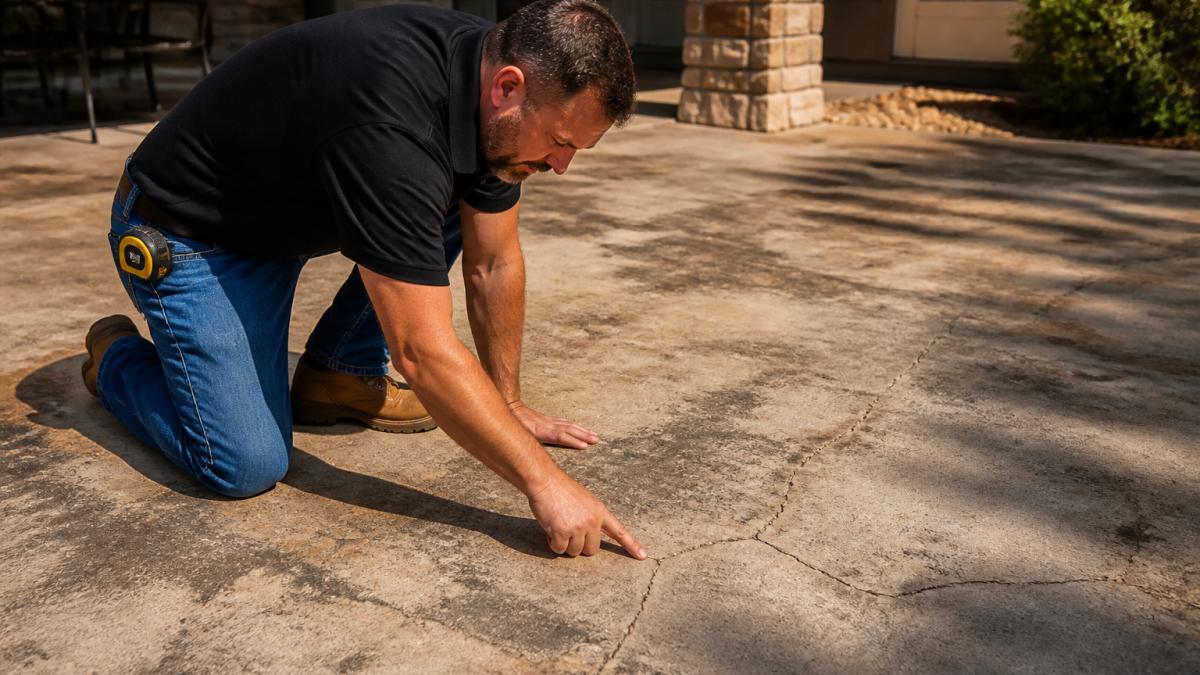
Hairline cracks are normal. Cracks wider than a quarter inch or deep branching cracks signal structural movement and need repair before overlay work.
Delamination is critical. Look for lifting or bubbling surfaces. If they move or feel hollow, the concrete is failing and an overlay will fail faster. Delamination results from freeze-thaw cycles or water intrusion from below.
Check for pop-outs, where small chunks of concrete have broken away. These create weak points where an overlay can’t achieve proper bonding.
Testing moisture and drainage
Moisture is invisible but deadly to overlays. Wet concrete underneath will push the new layer off as it dries. This is especially critical on elevated decks where water can collect beneath the slab.
Perform a moisture test: tape a plastic sheet to the concrete for 24 hours. Condensation indicates a moisture problem. Test multiple locations, especially near the house and shaded areas.
For elevated decks, check moisture from below. Wet wood, efflorescence, or mold indicate water wicking up through concrete. A moisture barrier may be needed before overlay work.
When an overlay is not suitable: If the deck shows signs of structural settling, has poor drainage that cannot be corrected, exhibits significant delamination, or has moisture problems originating from below the slab, an overlay will likely fail. In these cases, concrete replacement or deck reconstruction may be the only lasting solution.
Preparing Concrete for an Overlay: The Foundation Step
Preparation determines everything. Budget 40-50% of project timeline for this phase.
Cleaning the surface thoroughly
Remove all loose material with a pressure washer set to 3,000 PSI or less. Focus on dirt, algae, and loose coating.
For stubborn stains or mold, use a concrete degreaser or mild acid wash. Let sit 15-20 minutes, scrub, and rinse. Wait at least 48 hours before proceeding.
Repairing cracks and surface damage
Fill hairline cracks with concrete crack filler or epoxy. For wider cracks, chisel out the damaged area and remove all dust with a shop vacuum.
Apply bonding primer to cleaned cracks, then fill with polyurethane or epoxy repair compound that flexes with concrete movement.
For pop-outs and surface damage, grind away the damaged area until you reach solid concrete. The repair should be smooth and level with the surrounding surface.
Achieving the right surface profile
The concrete surface needs texture for the overlay to grip. Use a concrete grinder or shot-blaster to create a rough surface similar to coarse sandpaper. Vacuum away all dust and wipe with a damp cloth before drying completely.
Bonding the Overlay to Your Existing Slab
Apply a concrete bonding agent to the prepared surface per manufacturer instructions. The concrete must be damp but not wet. Mix overlay material to the right consistency and apply in sections, working quickly. Feather edges where sections meet to avoid visible seams.
Stamped Concrete Overlay Thickness and Material Selection
Most stamped concrete overlay installations use 1.5 to 2 inches of material.
For pool decks, specify a textured finish or anti-slip sealer. A slippery deck is a liability.
Installing Your Pool Deck Concrete Overlay
Mixing and applying the overlay
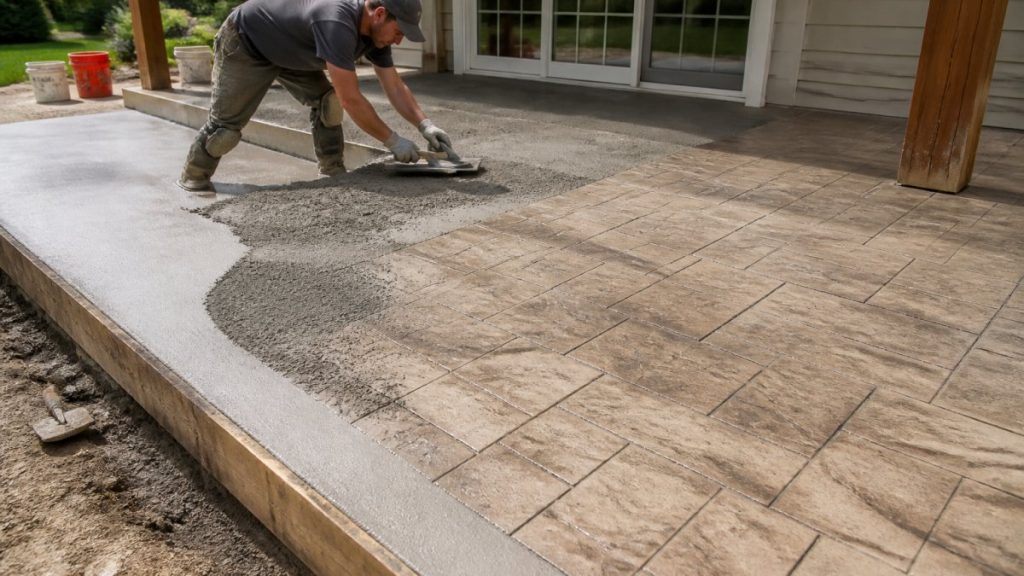
Mix only what you can apply in 30-45 minutes. Work in sections no larger than 100 square feet with a helper. Apply with a trowel, keeping a wet edge so sections blend smoothly.
Stamping patterns and adding color
Once the overlay reaches the right firmness (1-2 hours), apply color hardener if desired. Press stamping mats into the overlay using a tamper or mallet, working quickly and evenly. Apply release agent generously to prevent sticking.
Curing and sealing for protection
Don’t walk on the overlay for 24 hours. Keep the surface damp for 7 days by misting or covering with plastic. After 7 days, apply a concrete sealer and reapply every 2-3 years.
Stamped Concrete Overlay Durability and Long-Term Performance
A well-executed stamped concrete overlay for old decks typically lasts 10-15 years with proper maintenance. Key variables are prep quality, material selection, climate, and maintenance.
Lifespan and climate factors
In hot, dry climates, UV exposure fades color; use UV-protective sealer. In humid climates, moisture penetration is the primary threat; ensure proper drainage and moisture-resistant sealer.
Maintenance requirements and costs
Regular maintenance includes annual cleaning, resealing every 2-3 years, and crack repair.
Common failure modes and repair costs
Delamination (overlay separating from base concrete) is the most common failure, caused by poor prep, moisture, or inadequate bonding.
Cracking occurs from structural movement, freeze-thaw stress, or settling. Fine cracks are cosmetic; wide cracks (over 1/8 inch) indicate structural issues.
Color fading and UV damage result from inadequate sealing or sun exposure. Resealing slows fading; severe fading can be addressed with concrete stain or a new overlay layer.
Lifecycle cost comparison
Compare overlays against alternatives over a 20-year period:
Stamped concrete overlay:
- Expected lifespan: 10-15 years; may require partial repair or replacement after year 12
Concrete stain (no overlay):
- Does not address structural damage or worn appearance
Full concrete replacement:
- Lifespan: 30+ years with proper care
Overlays offer the best value if the existing concrete is structurally sound and properly prepared. If the deck has significant structural damage or drainage problems, replacement is more cost-effective long-term.
Slip resistance and safety
Wet stamped concrete can be slippery, especially on pool decks or in rainy climates. Specify a textured finish or anti-slip sealer during installation. Some contractors add grit (silica sand) to the overlay surface before curing, creating a non-slip texture. This reduces slip risk but may require more frequent cleaning to prevent algae buildup in textured areas.
| Factor | Impact on Durability | Mitigation |
|---|---|---|
| Prep quality | Critical; poor prep causes early failure | Invest time and money in thorough surface preparation |
| Overlay thickness | 1.5-2 inches is optimal | Avoid thin overlays (under 1 inch) |
| Material type | Polymer-modified lasts longer than cement-based | Use polymer-modified in freeze-thaw climates |
| Sealer application | Extends life by 3-5 years | Reseal every 2-3 years; use UV-protective sealer |
| Climate | Freeze-thaw shortens life; hot/dry extends it | Select materials rated for your climate |
| Maintenance | Regular cleaning and resealing critical | |
| Drainage | Poor drainage causes delamination | Ensure deck slopes 1/8 inch per foot and water drains away |
Bottom line: The key to maximizing lifespan and minimizing repairs is rigorous prep work, proper sealing, and consistent maintenance. If the deck has structural or drainage problems, address them before overlay installation or consider replacement instead.
Common Installation Mistakes to Avoid
The most common mistake is skipping prep work. Rushing through surface preparation causes overlays to fail within a year.
Finally, ignoring drainage issues around the deck almost guarantees failure. If water pools and doesn’t drain, moisture will eventually work its way under the overlay and cause delamination.
A stamped concrete overlay for old decks is a smart way to transform aging concrete without the cost of complete replacement. The work requires attention to detail, especially during prep and bonding, but the results are worth it. At Deck-O-Art, we’ve restored dozens of worn pool decks and patios across McKinney using this method. The difference between success and failure comes down to one thing: taking preparation seriously. If you’re ready to assess your deck and discuss overlay options tailored to your property’s specific drainage and structural needs, contact Deck-O-Art for a personalized consultation and site survey. We’ll help you understand whether an overlay is the right choice and deliver a stunning, durable result that increases your property’s value and enjoyment.
Frequently Asked Questions
Can you put a stamped concrete overlay on an old deck?
Yes, you can apply a stamped concrete overlay to an old deck if the existing concrete is structurally sound and properly prepared. The overlay bonds to the old slab, creating a decorative resurfaced layer. However, if the deck has severe cracking, delamination, or moisture problems, those issues must be repaired first. A professional assessment ensures your existing slab is suitable for overlay installation.
How thick should a stamped concrete overlay be?
Stamped concrete overlay thickness typically ranges from 1 to 2 inches, with 1.5 inches being the most common standard.
How long does a stamped concrete overlay last?
A properly installed stamped concrete overlay typically lasts with routine maintenance. Durability depends on the quality of surface preparation, bonding, overlay material, climate exposure, and sealer maintenance. Overlays in protected areas last longer than those exposed to heavy foot traffic, freeze-thaw cycles, or pool chemicals. Regular resealing every 2 to 3 years extends the overlay’s lifespan significantly.
How do you prepare an existing concrete deck for an overlay?
Preparation involves cleaning the surface with pressure washing or grinding to remove dirt, algae, and loose material. Next, repair any cracks or damaged areas with concrete filler. Create the correct surface profile by grinding if needed so the bonding agent adheres properly. Finally, allow the slab to dry completely before applying bonding agent. Proper preparation is critical, skipping this step leads to peeling and premature failure.