
Table of Contents
- How to Fix Standing Water in Backyard: Step-by-Step Solutions
- Diagnose the Cause Before You Dig
- How to Improve Yard Drainage with Simple Fixes
- Yard Grading for Drainage: Reshaping the Slope
- French Drain for Standing Water: A Subsurface Solution
- Dry Well for Yard Drainage: Managing Collected Water
- When to Call a Professional for Backyard Drainage
- Frequently Asked Questions
Last Updated: October 10, 2026
How to Fix Standing Water in Backyard: Step-by-Step Solutions
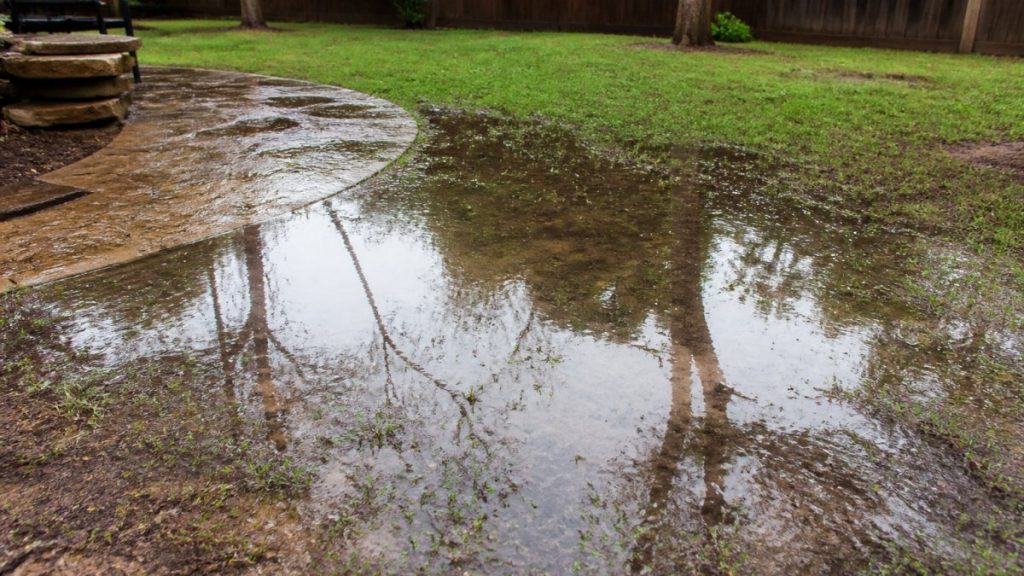
Standing water in a backyard is rainwater that has nowhere to go. At Deck-O-Art, we’ve handled drainage around pools and patios, and the pattern is always the same: water collects where the path of least resistance ends.
Below, we’ll show you exactly how to fix standing water in backyard problems, from a free grading check to a full subsurface drain. The fixes we cover range from a weekend of labor to a professional install.
Most guides jump straight to “dig a French drain.” That’s backwards. A drain in the wrong spot just moves the puddle.
Never let water sit against your foundation for more than a day or two. Repeated saturation weakens soil support and can lead to cracks and settling. Fix the source, not just the puddle.
Diagnose the Cause Before You Dig
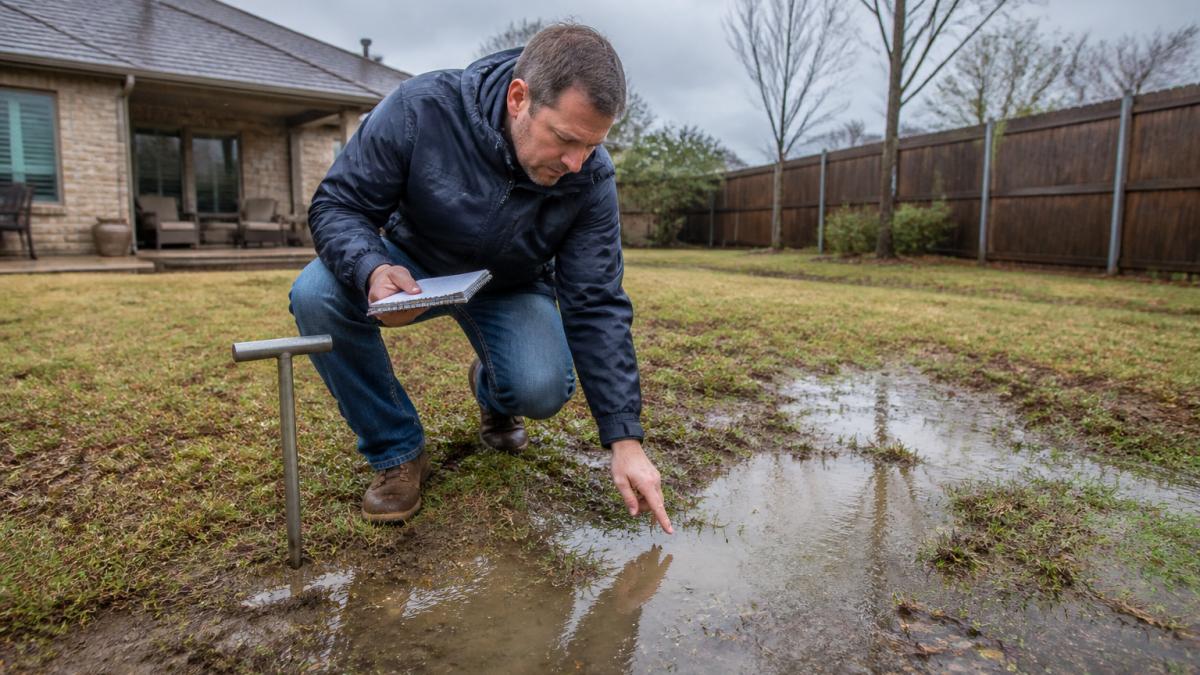
Diagnosing standing water starts with one question: where does the water come from? Rain, a downspout, a neighbor’s slope, or a high water table each need a different fix. The EPA guidance on stormwater runoff explains how runoff concentrates as it crosses a property.
Watch your yard during the next heavy rain. Note these clues:
- Water appears within minutes of rain starting: runoff from uphill or a blocked downspout
- Water shows up hours later: poor soil infiltration or a high water table
- Water sits only near the house: grading that slopes toward the foundation
- Water returns in the same spot every time: a genuine low spot
Run the Cause Decision Tree First
Most guides skip this step and jump to a fix. That’s why so many DIY drains fail.
1. Poor grading. Stand at the foundation and sight along the ground.
2. Compacted or clay-heavy soil. The slope looks fine, but water still sheets across the surface after every storm.
**3.
**4.
5. Roof runoff. Water pools near downspout outlets or along the drip line.
Is It a Grading Problem or a Drainage Problem?
It’s a grading problem if the ground slopes toward the house or a low spot. It’s a drainage problem if the slope is fine but water still sits because soil won’t absorb it. Grading fixes cost little and last decades. Drainage fixes cost more but handle volume. Many yards need both.
Do this test before you dig anything: pour a 5-gallon bucket of water on the soggy spot and time how long it takes to disappear. Under 10 minutes means good infiltration and a grading issue. Over an hour means a soil or water-table issue.
How to Improve Yard Drainage with Simple Fixes
Improving yard drainage often starts with the soil, not a trench. Compacted and clay-heavy soils absorb almost nothing, so water sits on top no matter how you slope the ground. A simple perk test tells you which you have: dig a hole about 12 inches deep, fill it with water, and see how fast it drains. If it’s still full after a few hours, your soil is the bottleneck.
Low-cost fixes to try first:
- Aerate the lawn to open up compacted soil
- Spread compost or a soil amendment to break up clay
- Add a layer of topsoil and work it in
- Keep grass taller to shade and loosen the surface
Aerate and Amend Compacted or Clay Soil
Aeration pulls small plugs from the lawn so air, water, and roots can move. For clay soil, follow aeration with compost worked into the top few inches. This won’t fix a true low spot, but it can end the thin sheet of water that lingers after every storm. Many homeowners find that soil fixes alone solve mild cases.
Test the soil before spending money. If water drains within an hour, your soil is fine and the problem is grading. If it doesn’t, amend the soil first, then decide on a drain.
Yard Grading for Drainage: Reshaping the Slope
Yard grading for drainage means reshaping the ground so it slopes away from the house and toward a safe outlet. The goal is a drop of about 6 inches over the first 10 feet from the foundation, a standard many builders follow.
How to regrade a small area:
- Mark the high and low points with stakes and string
- Add soil to the low spots, not just the edges
- Tamp the new soil in thin layers
- Recheck the slope with a level or a string line
- Seed or sod the bare ground
For larger yards, a contractor may use laser grading to hit the right fall. Expect this to matter most near the house, where water does the most damage.
FEMA guidance on protecting your home from flooding
French Drain for Standing Water: A Subsurface Solution
A French drain for standing water is a gravel-filled trench holding a perforated pipe that carries water away underground. It’s the go-to fix for a low spot that keeps flooding, or for moving water from a soggy side yard to a safe outlet. Done right, it’s invisible and lasts for decades.
The basic build:
- Dig a trench about 12 to 18 inches deep, sloping toward the outlet
- Line it with landscape fabric to keep soil out
- Add a few inches of gravel
- Lay the perforated pipe with holes facing down
- Cover with more gravel, then fold the fabric over
- Top with soil or sod
Two details decide whether it works. The trench must slope steadily to the outlet, and the outlet must discharge somewhere legal, not onto a neighbor’s lot.
| Fix | Best For | Effort | Lifespan |
|---|---|---|---|
| Aerate and amend soil | Mild pooling, clay soil | Weekend | 1-3 years |
| Regrading | Slope toward house | Weekend to a week | 10+ years |
| French drain | Recurring low spot | Weekend or pro | 20+ years |
| Dry well | Small, contained puddle | Weekend | 10-20 years |
Before you dig, call 811 to mark utility lines. Striking a gas or power line is dangerous and expensive. It’s a free service in most areas.
Dry Well for Yard Drainage: Managing Collected Water
A dry well for yard drainage is an underground pit that stores water and lets it soak into the ground slowly. It works best for a small, contained puddle where the soil drains reasonably well. Water flows in, fills the pit, and seeps away over a day or two. Think of it as a temporary holding tank, not a drain, the ground around it does the actual work.
Size the Dry Well to the Water, Not the Puddle
A dry well that’s too small overflows on the first big storm. A common rule of thumb is to size the pit to hold the runoff from the area draining into it during a typical heavy rain.
The pit needs at least 3 to 4 feet of separation from the seasonal high water table. If the pit sits in the water table, it can’t drain, it just becomes a permanent underground puddle.
Build It Like This
- Dig a pit 3 to 4 feet deep and wide
- Line the sides with landscape fabric to keep soil out
- Fill with gravel or stack perforated crates
- Connect the low spot to the pit with a buried pipe
- Cap with fabric and soil
Perforated crates hold more void space than loose gravel, so a crate-filled pit stores more water in the same footprint. Gravel is cheaper and simpler. Either works if the pit is sized right.
Soil Requirements and When a Dry Well Fails
A dry well won’t help if your soil is pure clay, since water can’t soak out. Test first: dig a test hole at the pit location, fill it with water, and check how fast it drains. If it drains within a few hours, a dry well can work. If it holds water overnight, skip the dry well and run a French drain to a daylight outlet instead.
Common failure modes to watch for:
- Silt clogging. Fine sediment washes in and seals the fabric or gravel. Line the inlet pipe with a filter sock and clean the catch basin annually.
- Undersized pit. It fills faster than it drains and overflows. Size up or add storage.
- High water table. The pit can’t drain downward. Relocate or switch to a surface outlet.
- No overflow path. A dry well with no emergency overflow can back up into the yard. Add a surface relief or a secondary outlet.
Maintenance and Lifespan
A properly sited dry well typically lasts 10 to 20 years before silt buildup reduces its capacity. Inspect the inlet and catch basin each spring, remove leaves and debris, and check that water still drains within a day after a storm. If it starts holding water longer, the fabric or gravel may need cleaning or replacement.
Never route a dry well’s overflow toward a foundation, a neighbor’s property, or a public right-of-way. Discharge must go to a legal outlet on your own land or into an approved storm system.
Dry Well vs. French Drain: Which to Choose
A dry well is the better call for a small, contained puddle with decent soil and no easy downhill outlet. A French drain is the better call when you need to move water a distance to a daylight outlet, or when the soil won’t absorb fast enough. If your yard has both a soggy low spot and a long run to a safe discharge point, a French drain feeding a dry well at the end can handle both jobs.
When to Call a Professional for Backyard Drainage
Call a professional when the water keeps returning, when the fix needs to cross a large yard, or when it sits near your foundation or pool.
Signs it’s time to bring in help:
- Water returns after every storm despite your fixes
- The low spot sits within a few feet of the foundation
- You need to move water a long distance
- The yard has a pool, patio, or hardscape in the way
- You’re unsure where the water can legally discharge
At Deck-O-Art, our site survey process maps the slope and flow before we touch a shovel. We handle drainage alongside pool and patio work, so the fix blends into the yard instead of fighting it.
Frequently Asked Questions
Why is water pooling in my backyard?
Water pools when the ground cannot absorb rainfall fast enough or when the slope directs water toward a low spot. Common causes include compacted soil, clay-heavy soil, poor yard grading, clogged gutters, and downspouts that release water too close to the foundation. In many cases, a combination of these factors creates the drainage problem. Start by checking where water enters and where it sits after a storm to narrow down the source.
How can you tell whether standing water is caused by poor grading or a drainage problem?
Check the slope first. If water consistently sits in a depression or flows toward your foundation, grading is likely the issue. If the yard slopes correctly but water still pools after rain, the soil may be compacted or there may be a subsurface drainage problem. A simple test: after a heavy rain, watch where water flows. If it moves toward the house or stalls in a low area, regrading or a French drain may be needed.
Do rocks help with drainage in a yard?
Rocks alone do not fix drainage. A layer of rocks can slow water and reduce mud, but without a proper outlet or subsurface system, water still has nowhere to go. Rocks work best as part of a French drain or dry well, where they surround a perforated pipe or form a storage cavity. Used alone, they may just hide the problem. For real results, combine rocks with grading, a drain, or soil amendments.
When should you call a professional to fix backyard drainage?
Call a professional when water pools near your foundation, when DIY fixes like aerating or adding topsoil have not worked, or when the problem involves installing a French drain, dry well, or regrading more than a small area. A pro can assess slope, soil, and drainage capacity, and ensure the fix meets local codes. If you are unsure about permits or safe discharge locations, a professional can guide you.
Standing water rarely fixes itself, and the longer it sits, the more damage it does to soil, foundations, and hardscapes. Whether you need simple regrading or a full drainage system tied into a patio or pool deck, Deck-O-Art brings a personalized consultation, a full site survey, and a mostly in-house team to every job. Get started with Deck-O-Art and turn that soggy corner into usable outdoor space.