
Table of Contents
- Why Patio Pavers Sink and Shift in McKinney
- How to Level Patio Pavers: A Step-by-Step DIY Method
- Patio Paver Leveling Tools and Materials You’ll Need
- Fixing Patio Paver Drainage Problems
- Patio Paver Repair Cost: DIY vs. Hiring a Pro
- When to Call a Professional for Uneven Patio Pavers
- Preventing Future Paver Shifting and Settlement
- Frequently Asked Questions
Last Updated: October 4, 2026
Why Patio Pavers Sink and Shift in McKinney
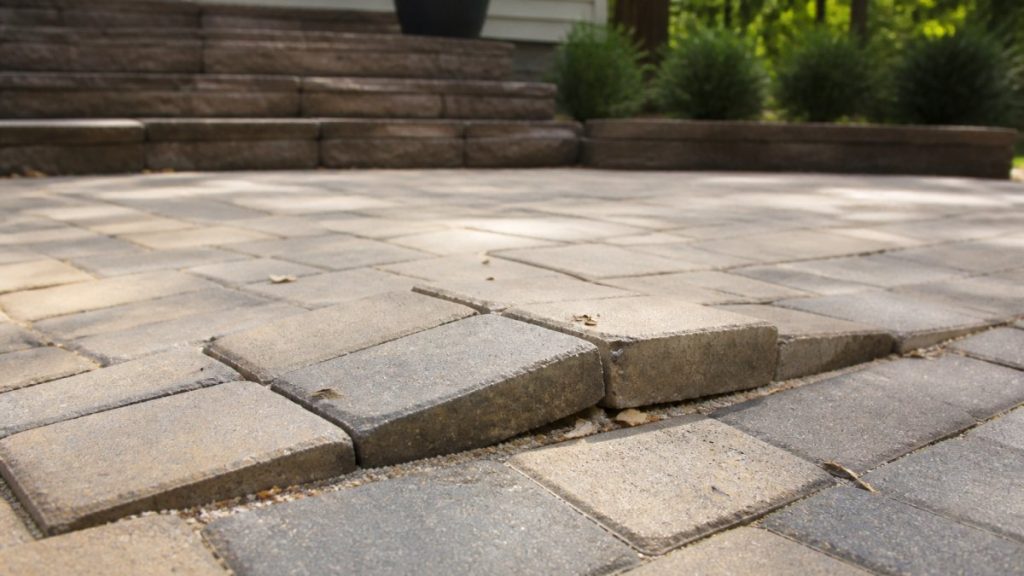
Uneven patio pavers are almost always a base problem, not a paver problem. The sand and crushed rock under your patio settle, wash out, or heave, and the surface above simply follows. At Deck-O-Art, we have repaired and rebuilt outdoor surfaces around McKinney since 1998, and the cause is nearly always the same story told in a different way.
Two forces do most of the damage here: soil movement and water.
Soil Movement and Expansive Clay
North Texas sits on expansive clay soil. It swells when it soaks up water and shrinks when it dries out. That cycle repeats every season.
When the clay under a patio moves, the base layer moves with it. A paver that sat flat in spring can rock by August. You did nothing wrong. The ground did it.
Drainage and Water Damage
Water is the other culprit. Rain that pools near a patio edge seeps under the pavers. It washes fine sand out of the bedding layer, leaving voids.
Once a void forms, that paver has nothing holding it up. Step on it and it drops. A common mistake is to reset the paver without fixing the drainage. The same spot sinks again within a season.
Never reset a sunken paver over a washed-out base. If you skip the base repair, the paver will sink again after the next heavy rain, and you will do the whole job twice.
How to Level Patio Pavers: A Step-by-Step DIY Method
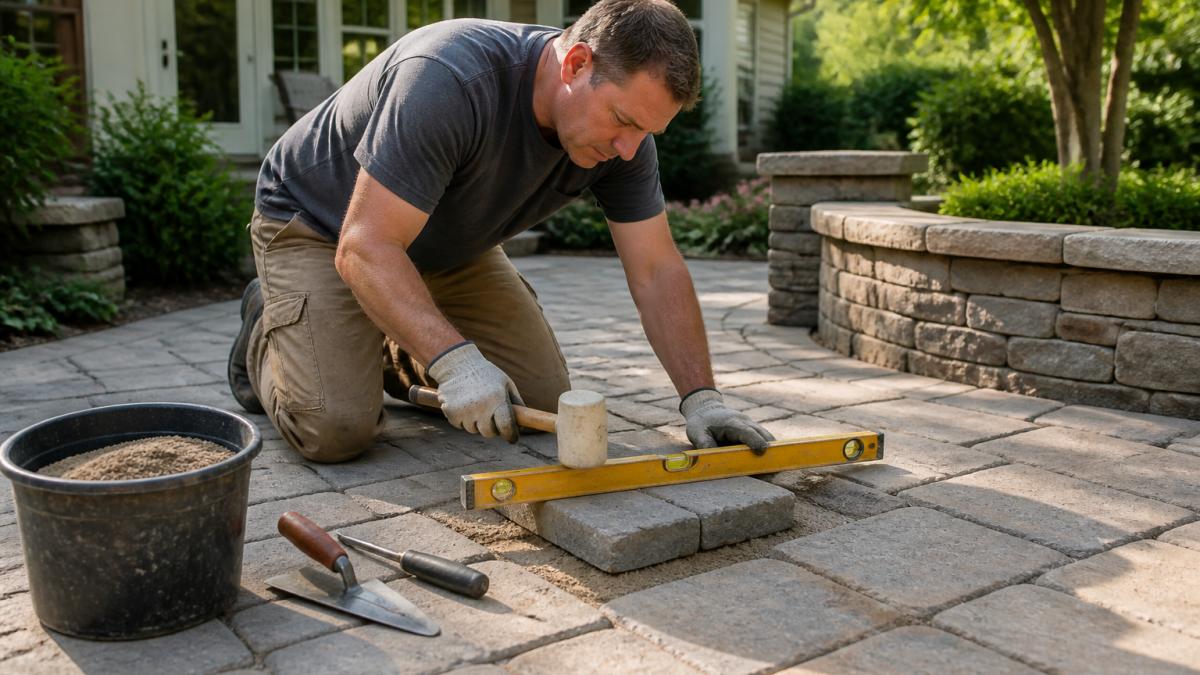
Leveling a paver patio means lifting the sunken units, rebuilding the base and bedding layer, and setting each paver back to a flat, even plane.
Here is how we would do it.
Step 1: Inspect and Mark the Problem Areas
Walk the patio and find every paver that rocks, dips, or sits high. Mark each one with chalk or a small stake.
Check the edges and the low corner of the patio first. That is where water collects and where damage usually starts. If several pavers in one area are loose, mark the whole zone, not just the worst one.
Step 2: Lift, Re-Level, and Reset the Pavers
- Pry up the marked pavers with a flat pry bar or screwdriver. Set them aside in order.
- Scrape out the old bedding sand and any loose debris.
- Add crushed rock to rebuild the base, then compact it in thin layers.
- Spread a fresh bedding layer of coarse sand, about 1 inch deep.
- Set each paver back down and tap it level with a rubber mallet.
- Check the slope with a level so water still runs away from the house.
- Sweep joint sand into the gaps and mist it with water.
Expected Result: The pavers sit flush with their neighbors, no rocking, and water still drains away from the foundation.
Patio Paver Leveling Tools and Materials You’ll Need
The right tools make this job faster and the result last longer. You do not need much, but you do need the correct base materials.
- Flat pry bar or stiff putty knife
- Rubber mallet
- 4-foot spirit level
For base preparation, the crushed rock matters more than the sand. A thin sand layer over a soft base will not hold. Compact the rock in lifts, then bed the pavers on top.
Use polymeric joint sand instead of plain sand in high-traffic or drainage-prone areas. It hardens slightly when wet, so it resists washing out and keeps pavers from shifting.
Fixing Patio Paver Drainage Problems
Water that has nowhere to go will find its way under your pavers. Fixing drainage is what keeps a leveling repair from failing, and it is the step most homeowners skip.
Start by watching the patio during and right after a heavy rain. Note where water stands, how long it lingers, and which direction it leaves. That pattern tells you which fix you actually need.
Match the Symptom to the Fix
- Water pools along the patio edge and seeps under the pavers. The patio slope is too flat or has reversed. Regrade the surface so it falls about 1/4 inch per foot away from the house, which is the minimum most builders target for positive drainage.
- Water sheets off the roof and lands on the patio. A downspout is dumping too close. Extend it at least 4 to 6 feet past the patio edge, or into a splash block that carries water away from the base.
- Water stands in the middle of the patio with no low edge to escape. Add a channel drain at the low point and tie it into the yard or a dry well. A channel drain is the right call when you cannot regrade without tearing out the whole patio.
Why This Matters More on Expansive Clay
The clay under most patios here does not drain quickly. When water sits against the base, the clay below swells, the bedding sand washes into the voids, and the pavers lose support. That is why a drainage fix is not optional after a leveling repair. If you reset the pavers and leave the water problem in place, the same spot sinks again after the next soaking rain.
Edge Restraints and Slope
Two details get overlooked:
- Edge restraint. Pavers at the border need a rigid edge, typically a concrete curb or a spiked plastic edge restraint, to keep them from spreading outward. Without it, the outer course creeps and opens gaps that let water in.
- Positive slope. Even a level-looking patio should shed water. Check the slope with a 4-foot level after any repair, and correct it if water stands.
If water also sits against your foundation, treat that as a separate problem and solve it at the same time. Foundation drainage and patio drainage share the same water, and fixing one without the other usually means fixing both again later.
Do not seal or top-dress a patio that still has a drainage problem. Trapping water under a sealed surface accelerates base failure and makes the next repair bigger.
Patio Paver Repair Cost: DIY vs. Hiring a Pro
Patio paver repair cost depends on how much area is affected, how bad the base damage is, and whether drainage work is needed.
DIY makes sense for a handful of pavers with minor settling. You supply the labor, and your cost is tools and materials.
Hiring a pro makes sense when the damage is widespread, the base is failing, or drainage is the root cause.
| Situation | Best Approach | Why |
|---|---|---|
| 1-3 loose pavers, minor dip | DIY | Small area, low risk |
| Widespread settling | Hire a pro | Base repair needs real compaction |
| Water pooling near patio | Hire a pro | Drainage fix is the real job |
| Cracked or broken pavers | Hire a pro | Replacement and matching needed |
| Repeated sinking in same spot | Hire a pro | Underlying cause was never fixed |
When to Call a Professional for Uneven Patio Pavers
Some jobs are worth handing off. Call a professional when the problem keeps coming back or when the base has failed across a large area.
Watch for these signs:
- Pavers sinking across most of the patio, not just one spot
- Water pooling against your foundation or pool deck
- Cracks in a poured surface next to the pavers
Foundation repair and drainage work go beyond a weekend DIY project. Deck-O-Art handles patio decking, hardscaping, and drainage as one job, so the fix addresses the cause. Our mostly in-house workforce means the same crew sees the project through.
If the same pavers sink twice, stop resetting them. The base or the drainage is the real problem, and no amount of surface leveling will fix it.
Preventing Future Paver Shifting and Settlement
Prevention comes down to water control and a solid base. Get both right and your patio holds its plane for years. The gap most guides miss is cadence: what to check, when to check it, and what a small problem looks like before it becomes a base repair.
A Simple Seasonal Routine
- After every heavy rain. Walk the patio and look for standing water. If water lingers more than a few hours, the slope or a drain is failing and the base is at risk.
- Twice a year, before and after the wet season. Sweep fresh joint sand into the gaps. Joint sand is the first line of defense; once it washes out, water pours straight into the bedding layer.
- Once a year. Check the edge restraints and the outer course of pavers. If the border has spread or the gaps have widened, water is getting in at the perimeter.
Why Each Step Works
- Joint sand. It locks the pavers together and blocks surface water from reaching the bedding layer. Polymeric joint sand hardens slightly when wet, so it resists washing out better than plain sand in high-traffic or drainage-prone areas.
- Edge restraint. It keeps the outer course from spreading, which is what opens the perimeter gaps water exploits.
- Drainage maintenance. Clearing channels and downspout outlets before the rainy season keeps water moving away instead of pooling against the base.
- Sealing. Seal only when the manufacturer recommends it and only after drainage is correct. Sealing a patio with a water problem traps moisture and speeds up base failure.
What to Leave Off the Pavers
Heavy planters, parked vehicles, and concentrated loads on a small area can crush the bedding layer and start a dip. If you must place something heavy, spread the load across a wider footprint with a board or pad.
If You Are Planning a New Patio
Insist on proper base preparation and compaction from the start: crushed rock compacted in thin lifts, a level bedding layer, and a positive slope away from the house. A correctly built base costs less than fixing settlement later, and it is the single biggest factor in how long the patio stays flat.
Prevention is a schedule, not a product. Check water after every storm, top up joint sand twice a year, and fix a single rocking paver before it becomes a base repair.
Frequently Asked Questions
What causes patio pavers to sink or become uneven?
In McKinney, the main causes are expansive clay soil, poor drainage, and inadequate base preparation. When water pools under the pavers, it softens the bedding layer and causes settlement. Tree roots, heavy foot traffic, and freeze-thaw cycles also contribute. Identifying the root cause is essential before you attempt any repair, because fixing the surface without addressing drainage or base issues means the problem will return.
Can I level patio pavers without removing them?
In some cases, you can lift individual pavers, add or remove bedding sand, and reset them without a full tear-out. However, if the base layer has failed or multiple pavers across a large area have shifted, spot-leveling only delays the inevitable. For isolated low spots, the lift-and-reset method works well. For widespread settlement, you will need to remove the affected pavers, recompact the base, and reinstall them.
How much does patio paver repair cost?
Patio paver repair cost depends on the size of the area, the extent of base damage, and whether drainage corrections are needed. Small spot repairs cost far less than full re-leveling or base reconstruction. DIY repairs save on labor but require tools and time. For an accurate estimate, schedule a professional inspection. Deck-O-Art offers a personalized consultation and site survey to assess your specific situation.
When should I hire a professional to repair uneven patio pavers?
Call a professional when the uneven area is large, when the base has clearly failed, or when drainage problems keep returning after DIY fixes. Other signs include cracked or broken pavers, sinking near a foundation, and standing water that does not drain within 24 hours. A professional can inspect the base, correct grading, and install proper drainage so the repair lasts.
Uneven patio pavers are a symptom, and the base and drainage are usually the cause. If your patio keeps sinking, or water pools around your pool deck and foundation, Deck-O-Art can help. As a BBB-accredited, fully insured company serving McKinney since 1998, we bring a mostly in-house workforce, a personalized consultation and site survey, and effective drainage solutions to every project. Contact Deck-O-Art to schedule your consultation and get a patio that stays flat and drains the right way.